

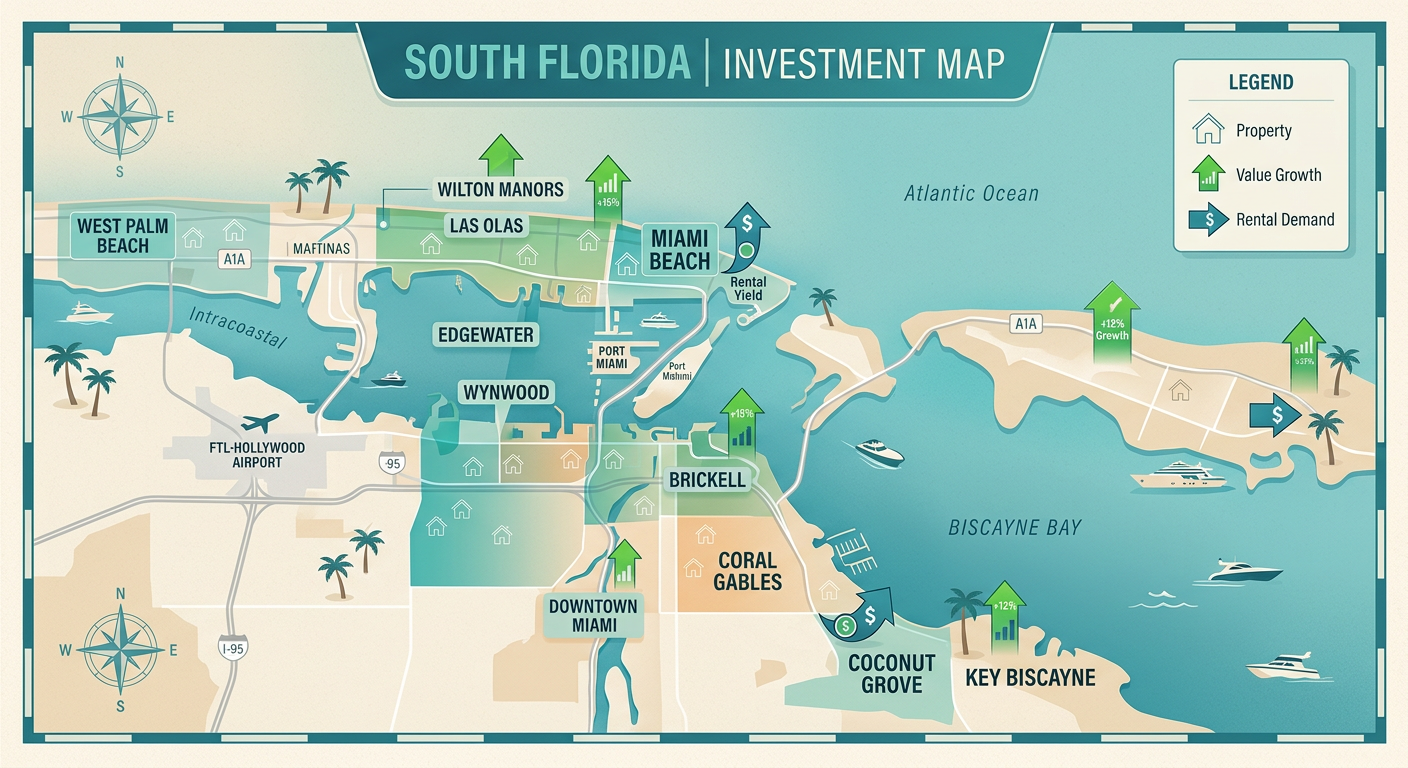
South Florida keeps drawing attention from investors for a reason. Strong population growth, year-round demand, and a mix of waterfront, suburban, and urban neighborhoods create a market with depth, not just hype. If you are exploring south Florida real estate investment opportunities, the key is understanding which strategy fits your goals, risk tolerance, and timeline.
Here’s the thing, this region is not one market. West Palm Beach, Boynton Beach, Delray Beach, Fort Lauderdale, Port Saint Lucie, Fort Pierce, Lake Worth, and Riviera Beach each behave a little differently. That’s good news for buyers, accidental landlords, snowbirds, and private equity groups because it means there are multiple ways to win if you buy with discipline.
Why South Florida Still Attracts Investors
South Florida benefits from a few powerful tailwinds. People move here for lifestyle, taxes, weather, and access to employment hubs, which supports both resale value and rental demand. Seasonal demand from snowbirds adds another layer of income potential, especially for well-located homes and furnished rentals.
Another advantage is diversity. You can target long-term rentals, vacation rentals, value-add single-family homes, small multifamily buildings, or higher-end homes suited for portfolio growth. That flexibility is one reason investors keep coming back to the region, even when cap rates compress in popular neighborhoods.
9 South Florida Real Estate Investment Opportunities to Consider
1. Long-Term Single-Family Rentals
Single-family rentals remain one of the most straightforward ways to build stable income. In family-friendly suburbs and commuter-friendly areas, these properties can attract longer tenant stays and lower turnover compared with short-term strategies.
This approach often works well for investors who want predictable cash flow and fewer operational surprises. It also appeals to accidental landlords who may have inherited a property, relocated, or decided not to sell right away.
2. Small Multifamily Properties
Duplexes, triplexes, and fourplexes can offer income diversification in one asset. If one unit is vacant, the others may still help cover expenses, which can make small multifamily a practical choice for investors trying to balance risk and return.
These properties can be especially attractive in areas with steady renter demand and limited buildable land. They also tend to work well for buyers who want scale without jumping straight into large institutional assets.
3. Vacation Rental-Friendly Homes
In select South Florida neighborhoods, vacation rentals can generate strong seasonal income. The key is doing the homework on local rules, neighborhood sentiment, insurance, and occupancy patterns before you buy.
This strategy is often best for buyers who want flexibility, personal use, and rental upside. It can also be a smart option for snowbirds who want to offset carrying costs when the home is not in use.
4. Value-Add Renovation Projects
Older homes with solid bones and outdated interiors can create real upside through strategic upgrades. Kitchen refreshes, flooring, curb appeal, and hurricane-ready improvements can all improve rentability and resale potential.
The best value-add deals usually come from buyers who understand renovation budgets and exit options. If you can buy below replacement cost and improve the asset efficiently, your margin for error improves.
5. Emerging Growth Corridors
Not every opportunity sits in the most famous ZIP code. Cities like Port Saint Lucie and Fort Pierce can offer more room for appreciation in certain submarkets, especially where infrastructure, population growth, and affordability are driving demand.
These areas can be appealing if you want to enter the market at a lower basis. They may not always produce the flashiest headlines, but they can offer strong long-term positioning.
6. Waterfront and Lifestyle Properties
Waterfront homes and lifestyle properties can hold value well because they are emotionally desirable and naturally scarce. That scarcity can help support pricing during slower periods, especially for buyers with specific location preferences.
These assets often work best for investors who understand premium pricing, higher insurance costs, and more selective tenant pools. When managed properly, they can become strong trophy assets inside a broader portfolio.
7. Asset Repositioning for Higher Income
Sometimes the opportunity is not the property itself, it is how the property is positioned. A lightly updated rental may be underperforming simply because it is marketed poorly, leased below market, or not professionally managed.
Repositioning can include new marketing, better tenant screening, upgraded service standards, and tighter expense control. For owners who want more from an existing asset, this can be a lower-risk path than buying something new.
8. Portfolio Plays for Private Equity
Private equity buyers often look for scale, operational efficiency, and repeatable returns. South Florida can support portfolio strategies across scattered-site homes, small multifamily, or mixed rental collections if acquisition and management are disciplined.
The most successful portfolio strategies usually rely on local expertise and clean reporting. That is where asset management, leasing discipline, and proactive maintenance make a big difference.
9. Buy, Improve, and Exit to Owner-Occupants
Some of the best returns come from buying homes that appeal to end users after improvement. Owner-occupant buyers often pay a premium for move-in-ready homes in desirable neighborhoods, which can strengthen your exit price.
This strategy works especially well when you buy in areas with strong schools, convenient commute access, and lifestyle appeal. If your renovation plan is thoughtful, you can capture value on both the front end and the back end.
What Smart Investors Watch Before Buying
When evaluating south Florida real estate investment opportunities, the property is only part of the story. You also need to think about insurance, flood exposure, HOA rules, maintenance costs, and tenant demand by micro-market.
A few practical questions help narrow the field:
- Does the neighborhood support your target rental strategy?
- Are insurance and property taxes still workable at your projected return?
- Is the home easy to maintain over the long term?
- Does the exit strategy make sense if the market cools?
The better the answers, the stronger the deal.
Where Professional Management Adds Real Value

A good property management and asset management partner can protect returns in ways many investors underestimate. That includes tenant placement, lease enforcement, maintenance coordination, rent collection, vacancy reduction, and long-term portfolio oversight.
For accidental landlords, this support can turn a stressful holding period into a stable income stream. For investors and private equity groups, it can improve reporting, reduce friction, and keep assets operating at a higher standard.
Common Mistakes to Avoid
One of the biggest mistakes is chasing the hottest zip code without checking the numbers. A flashy location is not always a profitable one if insurance, HOA costs, or vacancy eat into cash flow.
Another mistake is underestimating operational complexity. Vacation rentals, waterfront homes, and renovation projects can all work well, but only if you have a clear plan for management and maintenance.
Finally, some buyers focus only on appreciation and ignore current income. In a market as dynamic as South Florida, you want both if possible.
FAQ
Is South Florida still a good place to invest in real estate?
Yes, it can be, especially if you choose the right submarket and strategy. The strongest opportunities usually come from matching the property type to local demand instead of buying purely on emotion.
Which South Florida cities are best for rental investment?
That depends on your goals. West Palm Beach, Boynton Beach, Delray Beach, Fort Lauderdale, Port Saint Lucie, Fort Pierce, Lake Worth, and Riviera Beach each offer different mixes of rent growth, price point, and tenant demand.
Are vacation rentals worth it in South Florida?
They can be, but only when the property, location, and local rules align. Vacation rentals often require more active management and stronger compliance than long-term rentals.
What should accidental landlords do first?
Start by understanding current market rent, repair needs, and holding costs. Then decide whether the property should be stabilized, improved, or sold.
How can private equity approach South Florida effectively?
Focus on scalable acquisitions, clean operations, and consistent reporting. The market rewards disciplined buying and strong management more than guesswork.
Do I need professional management for my investment property?
If you want to protect time, reduce vacancy, and improve tenant experience, professional management is often worth it. It is especially useful for out-of-state owners and anyone juggling multiple properties.
Take the Next Step With Confidence
If you are serious about South Florida, your next move should be grounded in data, not headlines. The best opportunities usually come from careful underwriting, local insight, and a management plan that supports your long-term goals.
If you want help evaluating an acquisition, improving an existing rental, or building a portfolio strategy, visit Beaches Welcome Service to explore long-term rental management, vacation rental management, asset oversight, and real estate services tailored to South Florida investors and homeowners.
Conclusion
South Florida offers more than one path to success. Whether you are buying your first rental, repositioning a family home, or expanding a larger portfolio, the right opportunity is the one that fits your numbers and your strategy.
When you combine local market knowledge with solid management, south Florida real estate investment opportunities become much easier to evaluate, much easier to scale, and far more likely to deliver lasting value.

