

Real estate can be a powerful wealth-building engine, but only when every property is working toward the same goal. For investors, accidental landlords, snowbirds, and owners with mixed holdings, real estate asset management for portfolios is what turns scattered properties into a coordinated strategy.
Here’s the thing, owning assets is not the same as managing performance. A portfolio can look strong on paper and still underperform because of weak pricing, poor tenant retention, inconsistent maintenance, or missed market opportunities. In South Florida, where seasonal demand, rental trends, and buyer behavior can shift quickly, portfolio oversight matters more than ever.
What Real Estate Asset Management Really Means
Real estate asset management for portfolios is the process of looking at every property as part of a bigger investment picture. Instead of focusing only on day-to-day operations, asset management evaluates revenue, risk, capital needs, market positioning, and long-term value.
The difference between management and asset management
Property management handles the daily work, tenant communication, rent collection, maintenance coordination, and leasing. Asset management looks above that level and asks, “Is this property actually helping the portfolio grow?”
That broader view can change decisions around:
- Rent strategy
- Renovation timing
- Refinance opportunities
- Buy, hold, or sell decisions
- Expense control
- Geographic diversification
Why portfolios need a strategy, not just attention
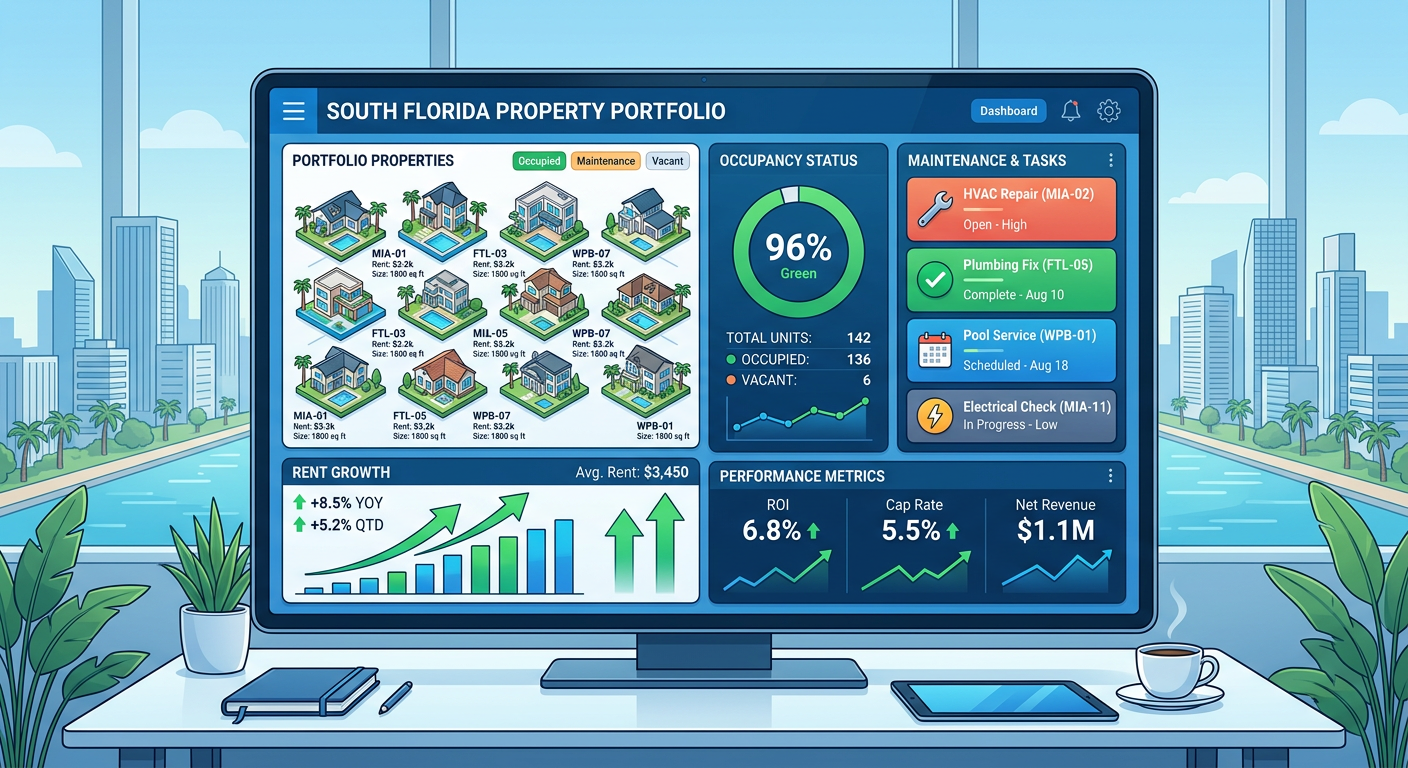
When you own multiple properties, even small inefficiencies multiply. One underpriced rental, one vacant season, or one missed capex project can affect returns across the entire portfolio. Asset management helps you stay proactive instead of reactive.
Why It Matters in South Florida
South Florida investors face a market with opportunity, but also complexity. Seasonal demand, hurricane preparedness, insurance costs, HOA rules, and shifting buyer preferences all affect performance. That is true in West Palm Beach, Boynton Beach, Delray Beach, Fort Lauderdale, Port Saint Lucie, Fort Pierce, Lake Worth, and Riviera Beach.
Seasonal demand creates both upside and risk
Vacation rental income can spike during peak travel periods, while long-term rentals may benefit from steady migration into Florida. A smart portfolio strategy balances those cycles rather than depending on one source of revenue.
Insurance, maintenance, and location all affect returns
In coastal and near-coastal markets, operating costs can rise quickly. Asset management helps owners plan for reserves, evaluate insurance impact, and decide when a property should be repositioned or sold.
For investors who want a broader look at Florida market conditions, resources from Florida Realtors and HUD can help with market and housing context.
Core Functions of Portfolio Asset Management
A strong portfolio strategy usually includes several ongoing responsibilities.
Performance tracking
Every property should be measured against key metrics such as:
- Occupancy rate
- Net operating income
- Cash flow
- Days vacant between tenants
- Repair and maintenance spending
- Return on investment
Capital planning
Not every upgrade is worth doing right away. Asset management helps prioritize repairs and renovations that improve rent, reduce turnover, or increase resale value.
Rent and pricing optimization
Inaccurate pricing can quietly drain returns. Whether you manage long-term rentals, multifamily assets, or vacation rentals, the right pricing strategy should reflect current demand, seasonality, and competing inventory.
Exit planning
Sometimes the best move is to sell. A good asset manager evaluates when a property has peaked in value, when capital needs are getting too high, or when redeploying equity into a stronger asset makes more sense.
Who Benefits Most from This Approach
Real estate asset management for portfolios is not only for large institutions. It can help several types of owners.
Investors and private equity
If you own multiple homes or multifamily assets, you need clear reporting and decision support. Portfolio oversight helps you compare properties and focus capital where it has the best return potential.
Accidental landlords
If you inherited a property, moved but kept your home, or rented out a house that was hard to sell, asset management brings structure to a situation that may have started informally.
Snowbirds
Seasonal owners often want income when they are away and personal use when they return. That requires planning around occupancy, maintenance timing, and guest or tenant expectations.
Home buyers and home sellers
Even if you own just one or two properties, understanding asset management can help you make smarter purchase, refinance, renovation, or sale decisions.
How a Strong Portfolio Strategy Improves Results
The goal is not just more activity. The goal is better outcomes.
Better cash flow
When pricing, expenses, and vacancies are managed together, cash flow becomes more predictable.
Better asset preservation
Routine inspections, reserve planning, and preventive maintenance protect long-term value.
Better decision-making
Instead of guessing which asset deserves attention, you can rank properties by performance and potential.
Better scalability
If you plan to grow, a strong system makes it easier to add new properties without losing control of the ones you already own.
Practical Questions Every Owner Should Ask
Before you scale, hold, or sell, ask:
- Which properties are truly outperforming?
- Which assets are draining time or capital?
- Are rents aligned with current market conditions?
- Do I have enough reserves for repairs and seasonal volatility?
- Is this property in the right long-term location?
These questions are especially important in dynamic markets like South Florida, where the strongest portfolio is usually the one that adapts fastest.
FAQ
What is real estate asset management for portfolios?
It is the strategic oversight of multiple properties with the goal of improving income, reducing risk, and increasing long-term value. It looks beyond daily operations and focuses on overall investment performance.
How is asset management different from property management?
Property management focuses on leasing, maintenance, tenants, and operations. Asset management focuses on portfolio strategy, financial performance, capital planning, and long-term decisions.
Do small investors need asset management too?
Yes. Even a small portfolio can benefit from better pricing, lower expenses, and clearer planning. The earlier you build good habits, the easier it is to scale.
Is this useful for vacation rentals and long-term rentals?
Absolutely. Each model has different revenue patterns, operating costs, and risks, so portfolio oversight helps you compare performance and make smarter choices.
Can asset management help me decide whether to sell a property?
Yes. It can show when a property has maxed out its upside, needs too much capital, or would perform better if the equity were redeployed elsewhere.
Why is this especially important in South Florida?
Because the market is influenced by seasonality, insurance costs, hurricane readiness, and shifting demand across cities like Delray Beach, Fort Lauderdale, and Port Saint Lucie.
Ready to Turn Your Properties Into a Real Portfolio?
If you want stronger returns, less stress, and a clearer long-term plan, now is the time to bring structure to your holdings. Beaches Welcome Service helps investors, accidental landlords, snowbirds, and homeowners align management with performance across South Florida.
Whether you need long-term rental management, multifamily oversight, vacation rental support, or help buying and selling homes, the right partner can help you protect value and grow with confidence. Learn more at https://beacheswelcomeservice.com/.
Conclusion
Real estate works best when every property has a role. With the right approach to real estate asset management for portfolios, you can improve cash flow, reduce waste, and make smarter decisions about what to hold, improve, or sell.
In a market as active as South Florida, that kind of clarity is a real advantage.

