

Renting out a property can be a great way to build long-term income, but the wrong tenant can quickly turn a solid investment into a stressful problem. That is why learning how to screen tenants for rental property matters so much, especially if you own a single-family home, a condo, or a small multifamily building in markets like West Palm Beach, Fort Lauderdale, or Delray Beach.
The good news is that tenant screening does not have to feel complicated. If you use a consistent process, you can reduce risk, protect your asset, and attract renters who pay on time, respect the home, and stay longer.
Start With Clear Rental Criteria
Before you accept applications, decide exactly what you are looking for. A strong tenant screening process starts with written criteria, not gut instinct.
Your criteria should cover things like:
- Minimum income requirements
- Credit score range
- Rental history standards
- Employment verification
- Pet policy
- Occupancy limits
- Criminal background review, where permitted by law
When your rules are clear, you can apply them consistently. That helps you make smarter decisions and avoid accidental fair housing violations.
Use a Thorough Application
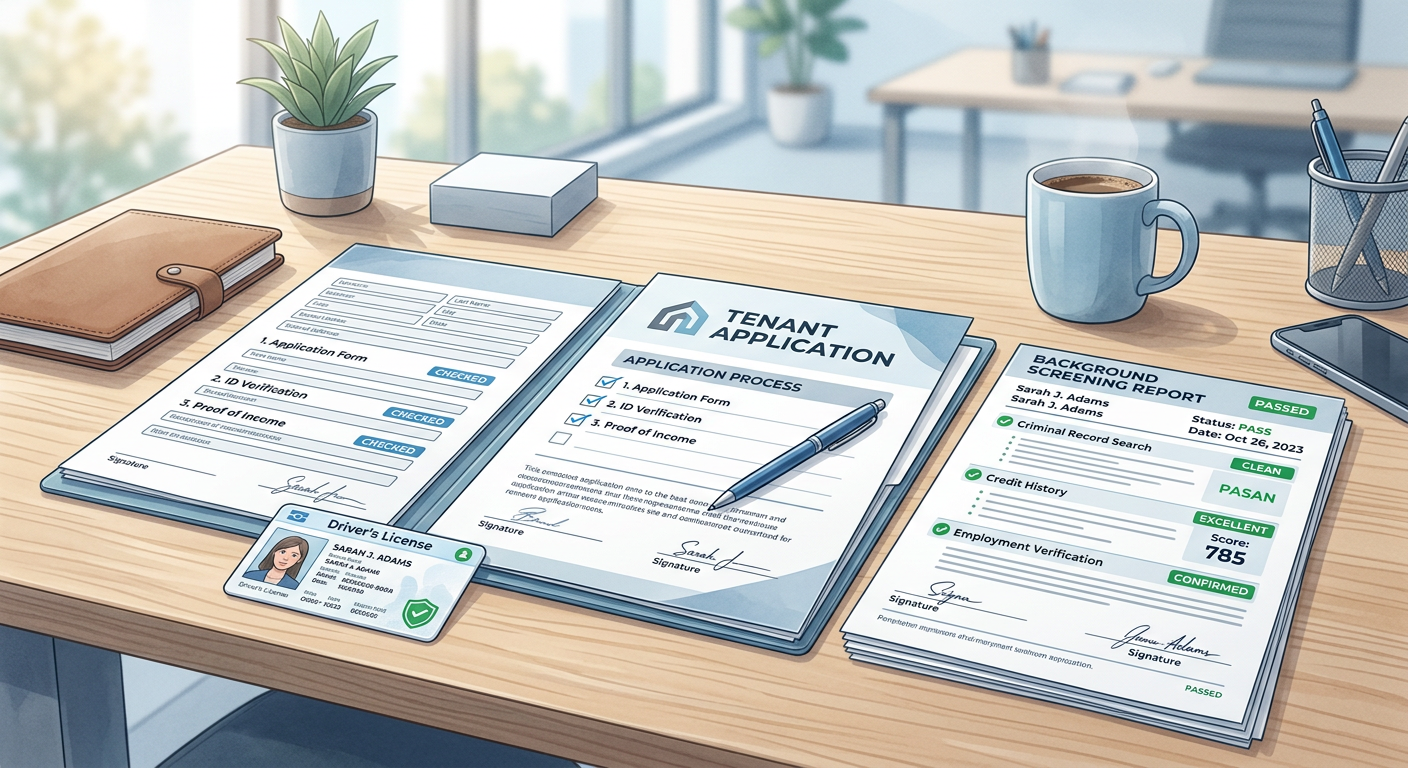
A detailed rental application is your first real filter. It should collect all the information you need to verify identity, income, and rental history.
Ask for:
- Full legal name and date of birth
- Current and previous addresses
- Employer and income details
- Landlord references
- Social Security number or other identifier for screening, if legally allowed
- Authorization to run credit and background checks
Verify Income and Employment
One of the simplest ways to reduce risk is to confirm that the applicant can actually afford the rent. A common guideline is to look for monthly income that is at least three times the rent, though some investors choose a different benchmark based on the asset and local demand.
Do not just take the applicant’s word for it. Verify pay stubs, W-2s, bank statements, or employer contact information. For self-employed tenants, tax returns or profit-and-loss statements may be useful.
Check Credit Carefully
Credit does not tell the whole story, but it can reveal patterns. You are looking for consistent payment behavior, high debt load, recent delinquencies, or collections that suggest financial instability.
A tenant with a lower score is not automatically a bad choice. What matters is the full picture. Someone with a short credit history but stable income and strong rental references may be better than a high-score applicant with repeated late payments.
Review Rental History and References
This is where you learn how the applicant behaves as a tenant. Contact previous landlords and ask direct questions about payment history, lease compliance, property care, and whether they would rent to the person again.
Pay attention to warning signs such as:
- Broken leases
- Unexplained moves
- Late payments
- Complaints from neighbors
- Property damage
- Evictions
If you manage rentals in places like Boynton Beach, Lake Worth, or Riviera Beach, where demand can move quickly, it may be tempting to rush this step. Don’t. A five-minute call can save you months of headaches.
Run Background Checks Where Allowed
Background screening can help identify serious concerns, but it must be done properly and in compliance with applicable laws. Use a reputable screening provider and follow all notice and authorization requirements.
Depending on your screening process and local rules, you may review:
- Criminal records
- Eviction history
- Identity verification
- Sex offender registry checks, where allowed
Be careful to evaluate records fairly and consistently. A blanket policy can create legal problems if it is not handled correctly.
Watch for Red Flags
Strong tenant screening is partly about spotting patterns that do not fit. A single issue may be explainable, but multiple warning signs usually deserve attention.
Common red flags include:
- Incomplete applications
- Inconsistent employment details
- Frequent address changes
- Refusal to provide references
- Pressure to skip screening
- Income that is difficult to verify
- Negative comments from prior landlords
Here’s the thing. Good tenants usually understand screening. Applicants who push back hard on basic verification often create more risk than they are worth.
Follow Fair Housing Rules
Tenant screening has to be objective. You should use the same standards for every applicant and avoid decisions based on protected characteristics.
That means your process should focus on measurable criteria like income, credit, rental history, and verifiable references. Keep written records so you can show that decisions were made consistently.
For official guidance, review the U.S. Department of Housing and Urban Development’s fair housing resources at HUD.
Why Professional Property Management Helps
If you are an accidental landlord, out-of-state investor, or owner with multiple homes across South Florida, tenant screening can take time and consistency. Professional management can simplify the process by handling advertising, application review, verification, and lease execution.
That is especially helpful if you own property in multiple cities and want a repeatable system across your portfolio. A local team can also help you balance speed and selectivity so you do not lose strong applicants while still protecting the asset.
A Simple Screening Workflow
If you want a practical process, keep it simple and repeatable:
- Publish clear rental criteria.
- Collect a complete application.
- Verify identity, income, and employment.
- Review credit and background information.
- Check rental history and references.
- Apply the same standards to every applicant.
- Document your decision.
Consistency is what turns tenant screening from guesswork into a reliable business system.
FAQ
What is the most important part of tenant screening?
The most important part is consistency. If you use the same criteria for every applicant, you reduce risk and make better decisions.
How much income should a tenant have?
A common standard is income of at least three times the rent, but the right threshold depends on your property, market, and overall risk tolerance.
Should I always check credit?
Yes, credit is one of the most useful tools for spotting payment patterns, but it should be reviewed alongside income, references, and rental history.
Can I reject an applicant for a low credit score?
You can use objective screening criteria, but make sure your standards are applied consistently and comply with fair housing and local laws.
What if an applicant has no rental history?
Look for compensating factors like strong income, stable employment, good credit, and solid references.
Is it better to be strict or flexible?
Be selective, but fair. The goal is to choose a tenant who is qualified and likely to stay current, not just the first person who applies.
Ready To Improve Your Leasing Process?
If you want fewer vacancies, better tenants, and less stress, a stronger screening process is the place to start. At Beaches Welcome Service, we help property owners and investors protect their rentals with professional management built for South Florida.
If you are ready to make leasing easier and more reliable, visit Beaches Welcome Service to learn how we can help.
Conclusion
Learning how to screen tenants for rental property is one of the most valuable skills a landlord can build. When you verify income, check references, review credit, and apply clear standards, you give yourself a much better chance of finding dependable tenants.
For owners in West Palm Beach, Fort Lauderdale, Delray Beach, Boynton Beach, and beyond, a disciplined screening process is not just smart, it is essential. It protects your property, supports steady cash flow, and helps you build a rental business that lasts.

