

Best Property Management South Florida: How to Choose Well
A low monthly fee can look appealing until a vacant unit, poorly documented repair, or missed HOA requirement costs far more. Finding the best property management South Florida option is really about choosing an operating partner that protects your income, property condition, and time.
That choice matters across West Palm Beach, Boynton Beach, Delray Beach, Fort Lauderdale, Port Saint Lucie, Fort Pierce, Lake Worth, and Riviera Beach. A strong manager brings local leasing knowledge, consistent resident communication, maintenance controls, and reporting that helps us see what is actually happening with the asset.
Florida's rental environment also rewards disciplined ownership. A 2025 report from Florida Realtors found statewide median rent rose from $1,238 in 2019 to $1,719 in 2023, a 39 percent increase. That does not mean every home should command more rent. It means owners need current comparable data, a well-maintained property, and a retention plan that keeps qualified residents from leaving.
What Separates a Strong South Florida Manager From a Basic One
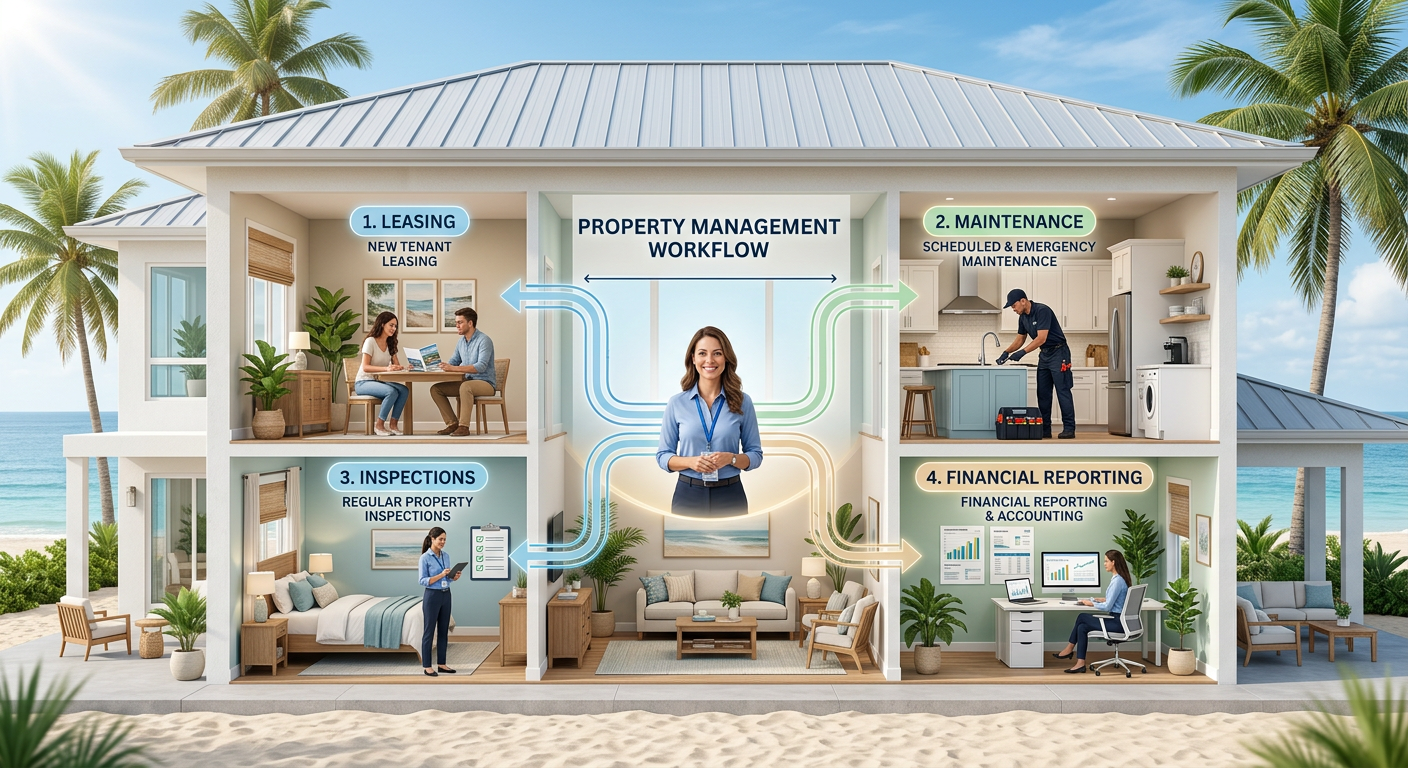
The best fit does more than collect rent and dispatch vendors. It creates a clear, repeatable system for leasing, maintenance, compliance, and financial oversight.
| Area | Basic Service | Strong Service | Why It Matters |
|---|---|---|---|
| Leasing | Posts a listing | Sets rent from local comps | Limits vacancy and concessions |
| Screening | Runs a report | Applies consistent criteria | Improves tenant quality |
| Maintenance | Reacts to calls | Plans, documents, and follows up | Protects the asset |
| Reporting | Sends a statement | Explains results and open issues | Supports better decisions |
| Inspections | Only at turnover | Scheduled, documented reviews | Finds problems earlier |
In South Florida, local execution is especially important. Salt air, humidity, intense rain, air-conditioning demand, seasonal occupancy, condo rules, and storm preparation create risks that a generic management model may miss.
Local Knowledge Has to Be Operational
A Fort Lauderdale condo, a Delray Beach seasonal home, and a small multifamily property in Fort Pierce need different workflows. The right manager should understand association applications, parking and pet restrictions, lease minimums, access protocols, local vendor availability, and the renter profile for each neighborhood.
Ask how the company adjusts rent recommendations when comparable listings linger, how it handles an HOA approval delay, and who coordinates access after a major weather event. Specific answers show operational readiness. Broad promises do not.
Good Reporting Makes the Property Easier to Own
We recommend monthly reporting that clearly shows collected rent, unpaid balances, vacancy days, management fees, maintenance spending, reserve balances, lease expiration dates, and unresolved issues. For investors and private equity owners, reporting should also connect day-to-day activity to net operating income, capital plans, and hold or sell decisions.
For a deeper look at the strategic side of ownership, our guide to South Florida portfolio oversight explains how asset management differs from routine property operations.
How to Compare Property Management Fees Without Missing the Real Cost
The lowest advertised percentage is rarely the full cost of management. Compare every provider using the same service list, fee schedule, response standards, and maintenance policy.
South Florida firms use several fee models. For example, HG Property Management's published pricing lists full-service management beginning at 8 percent of collected rent plus a leasing fee equal to one month's rent. WPB Home Management publishes a different structure, including a leasing fee equal to 75 percent of the first month's rent and no lease-renewal fee. These examples are not endorsements, but they show why owners should compare total cost and scope instead of one headline number.
Request These Details in Writing
Before signing, ask for a complete list of possible charges, including:
- New-lease and renewal fees
- Setup or onboarding fees
- Inspection fees and inspection frequency
- Maintenance coordination charges or vendor markups
- Vacancy checks and storm-preparation services
- Eviction coordination and legal-administration charges
- Early termination terms
- Reserve requirements and approval thresholds
A firm charging a little more can still be the better value if it leases faster, communicates clearly, prevents avoidable repairs, and produces accurate financial records. Conversely, a low fee is expensive if the manager is difficult to reach or treats maintenance as an afterthought.
A Day-One Operating Plan for South Florida Rentals
The strongest management relationship starts with a property-specific launch plan. Before a new tenant moves in, we should know the property's condition, expected expenses, decision rules, and priorities for the next 12 months.
Build a Baseline Before Leasing
Start with professional photos, current rent comparables, HOA documents, insurance contacts, warranty information, appliance ages, utility responsibilities, and a detailed move-in condition record. If we cannot establish a baseline, it becomes harder to evaluate performance or resolve disputes later.
This is also the time to separate routine repairs from capital projects. A leaking faucet is an operating expense. An aging HVAC system, roof work, impact protection, drainage improvements, or exterior painting belongs in a capital plan with estimated timing and funding.
For owners who want a more detailed maintenance rhythm, use this Florida rental property maintenance checklist. Preventive attention to air conditioning, drainage, plumbing, roofs, and exterior areas can reduce the chance that a small issue becomes a costly interruption.
Define Decision Rights Before the First Emergency
A good agreement identifies who answers after-hours calls, what counts as an emergency, which repairs require owner approval, and how photos, invoices, and tenant updates are documented. This is valuable for every owner, but especially for snowbirds and remote investors who cannot arrive at the property quickly.
Florida residential rental relationships are governed by Chapter 83, Part II of the Florida Statutes. A capable manager should follow a compliant process for deposits, notices, maintenance responsibilities, access, and documentation. For a dispute or property-specific legal issue, we recommend speaking with a qualified Florida attorney.
Use a Monthly and Quarterly Review Cadence
Each month, review collections, delinquency, maintenance costs, open work orders, lease dates, and reserve levels. Each quarter, look at rental positioning, renewal strategy, insurance, capital needs, vendor performance, and whether the property still supports your larger investment goal.
That cadence helps accidental landlords decide if keeping the home as a rental still makes sense. It also gives sophisticated owners a clearer view of which properties deserve additional capital and which may be ready for a sale or repositioning.
Match the Management Style to Your Ownership Situation
The best property management South Florida solution depends on how you own, where you live, and what you need from the property. A manager should tailor the service model to the asset instead of forcing every owner into the same package.
Investors and Small Portfolio Owners
Investors need performance visibility, not just occupancy updates. Focus on rent collected versus billed, maintenance trends, turnover time, lease expirations, and capital spending against plan. A manager should be able to flag underperforming homes early and recommend an action, not merely report a number.
Accidental Landlords
If you inherited a home, relocated for work, or kept a former residence, start with the basics: realistic rent, mortgage and insurance costs, HOA rules, reserves, landlord responsibilities, and the time you can commit. Our article on renting out a South Florida home can help you decide between a long-term, seasonal, or short-term strategy before you list.
Snowbirds and Remote Owners
Remote ownership requires dependable local eyes. Scheduled inspections, photo documentation, clear repair authority, vendor coordination, and a predictable update schedule matter more than a long list of software features.
Our guidance on managing a rental property from afar outlines the systems that help owners stay informed without being pulled into every maintenance call.
Questions to Ask Before You Hire
The clearest way to identify a capable manager is to ask practical questions that reveal how the company works when conditions are not perfect.
- Who responds to maintenance requests after normal business hours?
- What is your written screening standard, and is it applied consistently?
- How often do you inspect occupied properties and share documentation?
- What dollar amount can you approve for repairs without contacting us?
- How do you handle HOA applications and association communication?
- Which fees may appear beyond the monthly management fee?
- What does your owner report include, and when is it delivered?
- How do you prepare homes and communicate with tenants before a storm?
- What is the process if we want to end the agreement?
A reputable company should welcome these questions. If answers are vague, fees are unclear, or communication is slow before you become a client, those patterns are worth taking seriously.

Frequently Asked Questions
How much does property management cost in South Florida?
Long-term management commonly uses a percentage of collected rent plus separate leasing and optional service fees. The real cost depends on the property type, location, service scope, inspection plan, and whether leasing, renewals, maintenance coordination, or vacant-home oversight are billed separately.
Is a long-term rental or vacation rental better for our property?
Neither model is automatically better. Long-term rentals can provide steadier occupancy and fewer turnovers, while vacation rentals may create more revenue potential but require furnishing, frequent cleaning, guest communication, local compliance, and much more active operations.
Can a property manager handle condo and HOA requirements?
Yes, a qualified manager can coordinate leases and tenant documentation, but the association's approval rules, rental minimums, fees, parking policies, and move-in procedures still govern the timeline. We should confirm those requirements before advertising the unit.
How large should a rental-property reserve be?
There is no universal amount because age, condition, insurance deductibles, and systems vary by property. We recommend maintaining cash for ordinary repairs while separately planning for major capital items such as HVAC, roof, plumbing, and exterior work.
Will we still control repair decisions if we hire a manager?
Yes, provided the agreement establishes approval limits and emergency procedures. A good manager handles routine coordination efficiently while escalating larger, unusual, or capital-related decisions with enough information for us to choose confidently.
When is self-management a reasonable option?
Self-management can work when we live nearby, understand the legal and operational responsibilities, have dependable vendors, and can respond consistently. It becomes harder when travel, multiple units, distance, work schedules, or major maintenance needs create delays.
Put a Local Plan Behind Your Property Goals
If you want hands-on support for a long-term rental, vacation home, multifamily asset, or future sale, Beaches Welcome Service can help us create a property-specific management plan. We can review the home, clarify operating priorities, and build a service approach around your location, ownership style, and investment goals.
Choose Clarity, Not Just Convenience
The right management partner brings structure to work that can otherwise become reactive: pricing, tenant placement, maintenance, compliance, financial controls, and long-term planning. That structure is what helps an owner protect income without losing sight of the property's condition or future value.
When comparing the best property management South Florida providers, look past polished marketing and low starting fees. Choose the firm that can explain its process, document its work, communicate when it matters, and manage your specific property as the asset it is.

