

Lake Worth property owners face a real choice when deciding how to position their home, condo, or investment: rent long term for steady income or run it as a vacation rental for higher seasonal returns. Both strategies work in South Florida, but which one fits your goals, tolerance for hands-on work, and risk profile? This guide breaks down the financial math, operations, legal differences, and local market signals so you can decide with confidence.
When weighing options for Lake Worth specifically, keep local seasonality, typical monthly rents, and tourism demand top of mind. In the paragraphs below you will find a practical comparison of cash flow, costs, guest and tenant expectations, regulatory considerations, and a short decision checklist tailored to investors, accidental landlords, snowbirds, and private equity owners active in West Palm Beach, Delray Beach, Fort Lauderdale, Port Saint Lucie, Fort Pierce, Lake Worth, and Riviera Beach. Also read Beaches Welcome Service’s property management overview if you want a clear picture of hands-off options.
Quick Snapshot: Long Term vs Vacation Rental
What owners usually want
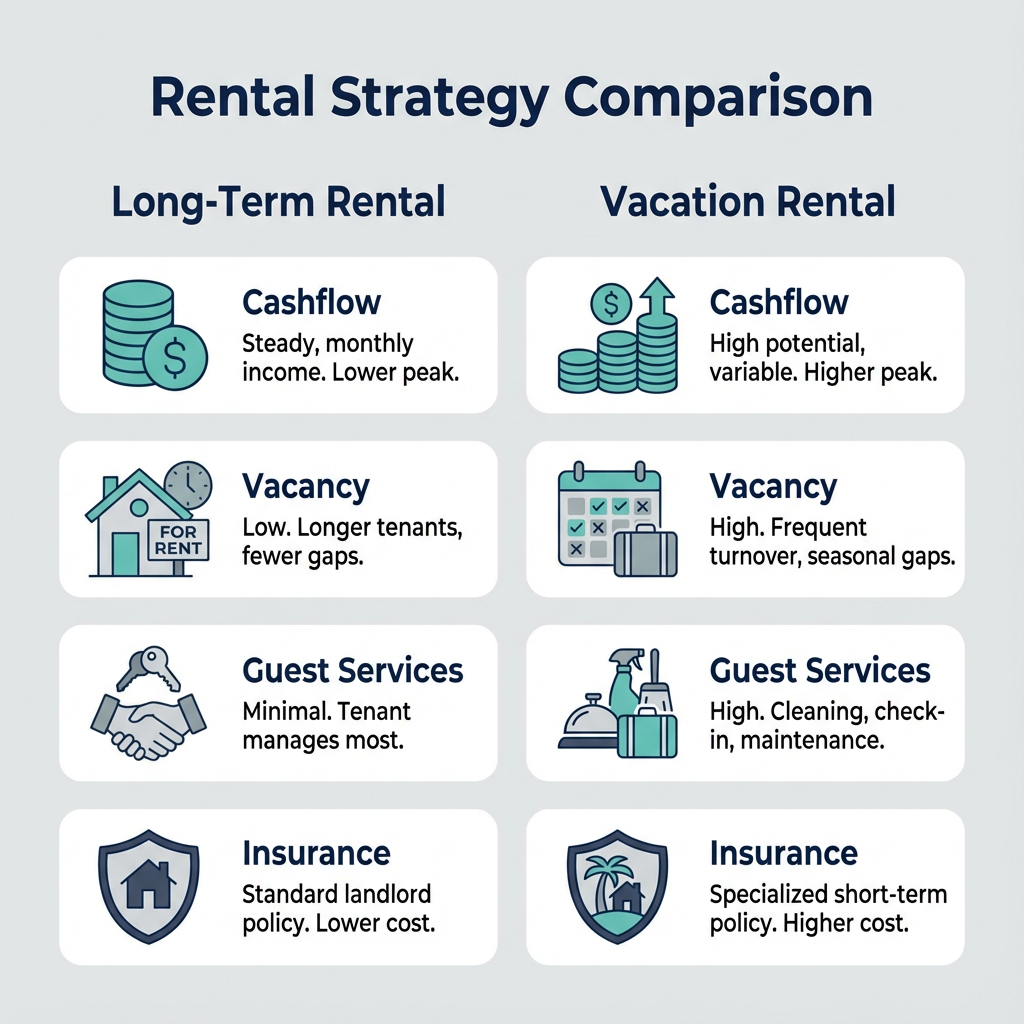
- Long-term rental: steady monthly income, lower turnover, reduced marketing and cleaning workload, simpler compliance for many local jurisdictions.
- Vacation rental (short-term): higher nightly rates and potential for higher gross revenue during high season, more hands-on operations, guest services, and marketing required, plus higher variable costs.
Local rent signal
Lake Worth average rents are market-specific and shift across months. Recent market trackers show median rents around the low to mid two-thousands for many unit types, which matters when you model long-term yield. For owners considering short-term use, platforms and revenue tools show seasonal spikes that can push effective monthly income above long-term levels in peak months. Use local sources and recent market reports to model your scenarios before committing.
Money Math: Income, Costs, and Vacancy
Revenue potential
-
Long-term rental: predictable monthly rent, higher occupancy certainty, and lower marketing spend. Good for cashflow-focused investors and owners who value predictability. Typical yield depends on purchase price, local rent levels, and operating cost structure. For Lake Worth, compare your expected monthly rent to neighborhood comps.
-
Vacation rental: higher average daily rates during high season often increase gross revenue, but average occupancy can vary. When occupancy drops, net income can fall below long-term alternatives if you do not control costs or maintain a high ratings profile.
Expenses to model
- Utilities, furnished vs unfurnished decisions, frequent turnovers, cleaning, linens, professional photography, dynamic pricing fees, platform commissions, short-term rental taxes, and more for vacation rentals.
- For long-term rentals, expect fewer turnover costs and usually tenant-paid utilities, but budget for maintenance reserves and occasional vacancy. Insurance and local licensing differ depending on short-term rules.
Vacancy and effective yield
A 12-month long-term lease yields steadier cashflow. A vacation rental needs strong occupancy and revenue management to beat that steady yield after expenses. Always build models using conservative occupancy, and run a 6, 9, and 12 month sensitivity analysis before deciding.
Operations and Workload
Day-to-day differences
- Long-term: tenant screening, lease enforcement, periodic maintenance, and renewal management. Lower daily involvement once a good tenant is placed, but legal compliance and emergency maintenance still require reliable processes.
- Vacation rental: constant guest communication, check-in processes, rapid cleaning and turnover, guest support, calendar management, and more frequent maintenance needs. You will either need to build an operations team or hire a local vacation rental manager.
If you want help, Beaches Welcome Service explains turnkey options on their property management page and offers services across single-family and multi-family portfolios.
Legal and Regulatory Considerations in Lake Worth
Local rules evolve, and some areas restrict or require registration for short-term rentals. Make sure to confirm municipal rules for licensing, occupancy limits, safety requirements, and transient rental taxes. When in doubt, consult local government resources and consider professional management to remain compliant.
Which Owners Should Choose Which Strategy?
-
Choose long-term rental if:
-
You want stable monthly cashflow with fewer daily demands, and lower turnover costs.
-
You are a snowbird or absentee owner wanting predictable income without frequent guest operations.
-
Your property and neighborhood attract reliable long-term tenants at market rents.
-
Choose vacation rental if:
-
Your property is in a desirable tourist corridor or close to beaches, nightlife, or seasonal events and you can capture high nightly rates.
-
You can handle or pay for frequent turnovers, marketing, and cleaning, or you want to outsource to a specialist.
-
You accept seasonal volatility and want to optimize revenue for peak months.
Decision Checklist for Lake Worth Owners
- Run conservative income models for both scenarios, including maintenance, vacancy, platform fees, and taxes.
- Check local short-term rental rules and insurance implications. If you do not have short-term rider coverage, get quotes now.
- Evaluate personal capacity, or the cost to hire management. Compare net yields, not gross rates.
- Consider a hybrid approach: offer mid-term leases in shoulder seasons, and vacation rentals during peak months, if local rules allow.
Practical Example: Modeling a Lake Worth Home
Here is the thing, models change by neighborhood and home type. Use local comps for 1-, 2-, and 3-bedroom units and run at least three scenarios: conservative, expected, and optimistic. Factor in an annual maintenance reserve of at least 5 percent of gross rent for single-family homes and higher for older properties. If you want a sample analysis and a local market read, contact Beaches Welcome Service to request a tailored cashflow estimate and local comps.
Frequently Asked Questions
How do local short-term rental rules differ from long-term rules in Lake Worth?
Short-term rentals commonly require registration, transient rental tax collection, and safety inspections. Long-term rentals follow landlord-tenant laws with different notice and deposit rules. Confirm current local ordinances before listing.
Can I switch between long-term and vacation rental seasonally?
Many owners use a hybrid approach, particularly in seasonal markets. Verify local regulations and insurance coverage first, then build flexible systems for cleaning, marketing, and bookings.
Which option typically gives higher net returns in Lake Worth?
Vacation rentals often produce higher gross revenue in peak season, but after fees, cleaning, insurance, and variable occupancy, net returns can be lower or similar to long-term rentals. Run a detailed pro forma that includes all costs.
What insurance do I need for a vacation rental?
Standard homeowner policies may exclude short-term rentals. You likely need a short-term rental endorsement or specialized policy. Talk to an insurer familiar with South Florida vacation properties.
How do I find reliable local management?
Look for managers with transparent fee structures, strong local reviews, and experience across short-term and long-term models. Beaches Welcome Service offers tailored management options and can provide local references.
Ready to Optimize Your Lake Worth Rental Income?
If you want a custom cashflow analysis, local rent comps, or help deciding between long-term and vacation rental strategies, reach out to Beaches Welcome Service. Their property management team can run numbers for your address and recommend the approach that matches your goals. Visit the Beaches Welcome Service property management page to learn more, or get a consultation through their contact page.
Conclusion
There is no single right answer for every Lake Worth owner. Long-term rentals bring steadiness and simplicity, while vacation rentals can unlock higher seasonal revenues with more operational complexity. Your decision should balance desired cashflow stability, willingness to manage or pay for operations, local regulations, and neighborhood demand. Run conservative models, check local rules, and consider professional management if you prefer a hands-off ownership experience. If you want help modeling outcomes for your Lake Worth property, Beaches Welcome Service can provide local comps, management options, and a step-by-step plan to maximize return with minimal stress.

Contact and resources
- Property management services and options are detailed on the Beaches Welcome Service property management page: https://beacheswelcomeservice.com/property-management/
- Read practical owner guides such as the accidental landlord playbook on the Beaches Welcome Service blog: https://beacheswelcomeservice.com/blog/accidental-landlord-south-florida-help-practical-owner-guide/
- For a tailored consultation, use the Beaches Welcome Service contact page: https://beacheswelcomeservice.com/contact/
Further reading and market data
- Zillow rental insights for Lake Worth, Florida: https://www.zillow.com/
- RentCafe market trends and data: https://www.rentcafe.com/
- Redfin neighborhood rental snapshots: https://www.redfin.com/

