

Deciding how to rent your South Florida property can feel overwhelming, especially with seasonal demand, tourism, and local rules to navigate. Whether you own a single-family home in West Palm Beach, a condo in Delray Beach, or a multi-family asset in Fort Lauderdale, your choice between a long-term lease and a short-term vacation model changes everything about income, management, and risk.
long term vs short term rental south florida is more than a phrase, it is a strategic decision that affects cash flow, maintenance, taxes, and who you market to. Below I compare both models, explain the trade-offs for investors, accidental landlords, and snowbirds, and give practical next steps you can use right away.
Why the choice matters in South Florida
South Florida is unique, demand fluctuates with tourism and snowbird seasons, and short-term nightly rates can spike during holidays and events. That means revenue potential and vacancy risk differ dramatically between short and long-term models. Your decision should match your financial goals, time availability, and tolerance for turnover and regulation.
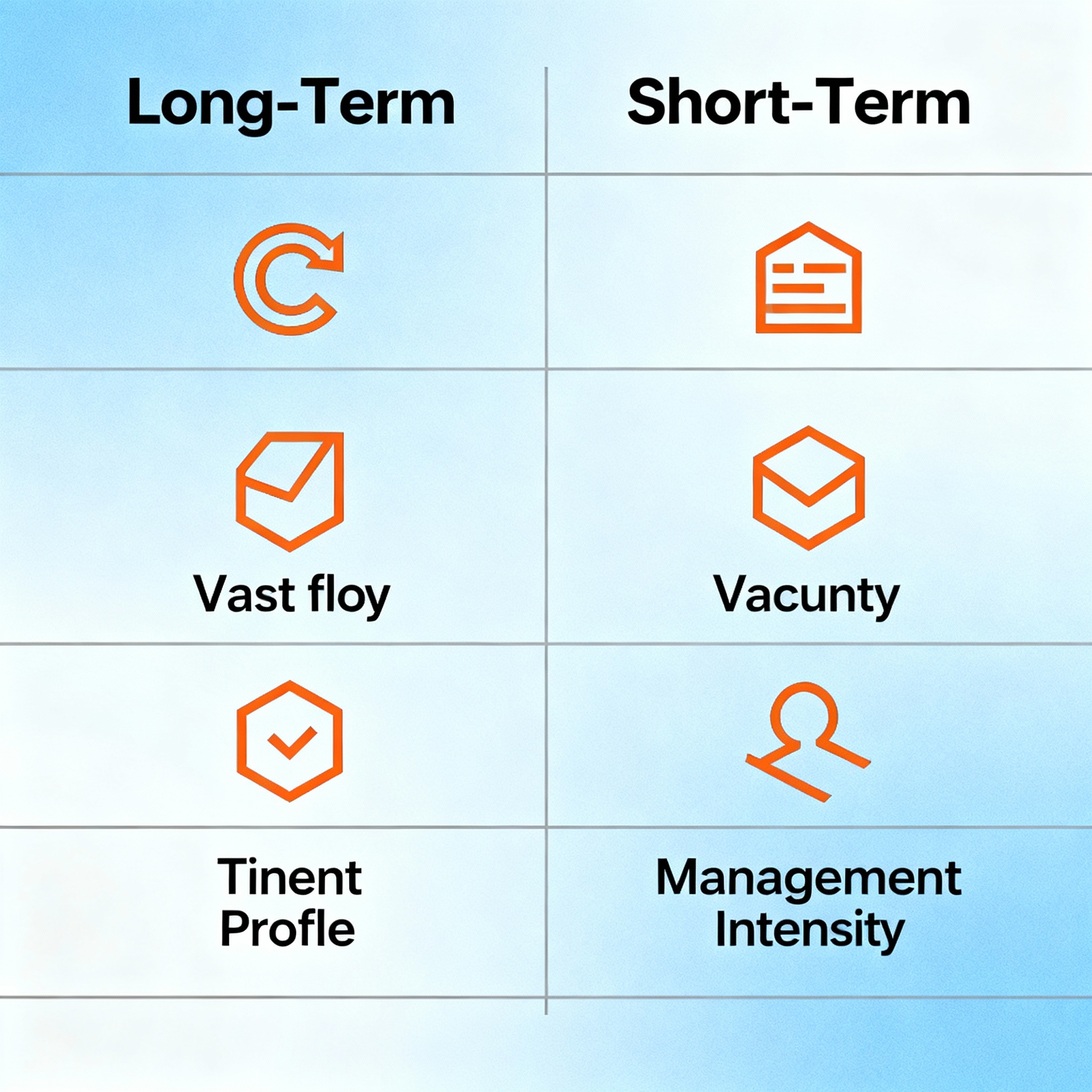
Head-to-head: economics and earnings
Income stability vs revenue upside
Long-term rentals give steady monthly cash flow, predictable occupancy, and less frequent turnover. Short-term rentals often generate higher gross revenue per night, but occupancy varies and management costs are higher. For investors who need consistent monthly debt coverage, long-term leasing often wins. For owners chasing higher peak returns and willing to manage or pay for guest services, short-term can outperform in high-demand neighborhoods.
Operating costs and management
Short-term units require frequent cleaning, amenity provisioning, dynamic pricing, and marketing on platforms. Expect higher utilities, supplies, and maintenance frequency. Long-term rentals shift many recurring costs to tenants and reduce turnover expenses, but you trade off potential peak-season revenue.
Example scenarios for South Florida markets
- A beachfront condo in Delray Beach may produce strong nightly rates during winter months for snowbirds, making short-term attractive. See our Deep Dive on vacation rental costs for Delray Beach for local benchmarks. (https://beacheswelcomeservice.com/blog/vacation-rental-management-cost-delray-beach-complete-2025-guide/)
- A single-family home in Port St. Lucie or Fort Pierce often performs reliably as a long-term rental for families and local workers, with lower management intensity. Learn about landlord rules in Port St. Lucie and compliance considerations. (https://beacheswelcomeservice.com/blog/what-are-landlord-laws-in-port-st-lucie-a-practical-owner-guide/)
Legal, tax, and regulatory differences
Zoning, business tax receipts, and transient lodging rules
Short-term rentals can trigger local transient lodging regulations, business tax receipts, and tourism taxes. Long-term rentals are primarily governed by Florida landlord-tenant law, but local registration or code rules can still apply. Always confirm city rules in Palm Beach, Broward, and St. Lucie counties before listing.
For state-level landlord-tenant rules, review Florida Statutes Chapter 83 for details on deposits, entry, and eviction timelines. (https://www.flsenate.gov/Laws/Statutes/Chapter/83)

Insurance and liability
Short-term operations usually require additional liability coverage or a short-term rental endorsement. Long-term leases typically fit within standard landlord policies but verify coverage limits for absent-owner scenarios like snowbird rentals.
Taxes and recordkeeping
Short-term hosts often collect and remit transient occupancy taxes and need robust recordkeeping for nightly revenue, platform fees, and short-term deductions. Long-term landlords track consistent monthly rent and depreciation schedules, which may differ on tax treatment.
Management and operational considerations
Time and service level
If you live locally and enjoy hospitality, short-term rentals can be managed profitably. If you prefer a low-touch investment or live out of area, long-term leases or professional property management are better fits. Beaches Welcome Service offers full property management for both short-term and long-term models, including guest coordination, maintenance, and revenue optimization. (https://beacheswelcomeservice.com/property-management/)
Tenant profile and screening
Short-term guests are transient by nature. Expect frequent background checks through booking platforms, higher guest turnover, and the need for rapid problem resolution. Long-term tenants require more in-depth screening, references, and lease enforcement, but turnover and vacancy risk are lower.
How investors and accidental landlords should choose
- Define your priority: steady income or maximum seasonal revenue.
- Evaluate location micro-markets, not just the city: beachfront, downtown, and event-driven neighborhoods favor short-term income.
- Run a simple pro forma for both options using conservative occupancy and expense assumptions.
- Consider hybrid approaches, like seasonal long-term leases for summer or monthly mid-term leases, to blend stability and upside.
If you want help modeling scenarios for a specific property, contact our team for a tailored assessment. (https://beacheswelcomeservice.com/contact/)
Pricing toolbox: quick rules of thumb
- Short-term rents get premium nightly rates, but monthly effective income can drop with low occupancy months.
- Long-term rents reduce management fees and vacancy risk, often delivering 70 to 90 percent of potential gross short-term yield on an annualized basis after costs in many markets.
- Always model worst-case occupancy months and plan a reserve for repairs and seasonality.
Common objections addressed
You might worry about regulation, or that short-term guests will damage the property. Those risks are real, but you can mitigate them through strict guest screening, security deposits, enhanced insurance, and by hiring a local professional manager to enforce house rules and handle maintenance.
FAQs
How do I decide whether to switch a South Florida property from long-term to short-term?
Start with local demand research, check municipal rules on transient rentals, and run a net income comparison that includes management, cleaning, utilities, and vacancy. Consider a trial period during peak season.
Will short-term rentals always make more money than long-term leases?
Not always. Short-term can produce higher gross revenue during high season but may underperform annually after costs and vacancy are considered. Location, event calendars, and management quality determine outcomes.
What permits or taxes should I watch for in Fort Lauderdale or West Palm Beach?
Many cities require transient lodging registration, collection of tourist taxes, and business tax receipts for short-term rentals. Check municipal websites or consult a local manager to confirm requirements.
Can snowbirds rent my South Florida home for a few months without switching models?
Yes, mid-term leases for seasonal tenants are common. They blend stability with higher seasonal rates and often require different lease terms and screening.
Should I hire a property manager for a short-term rental?
If you are not local, or if you want to scale, a professional manager handles guest communication, cleaning, and maintenance efficiently. Beaches Welcome Service manages both short-term and long-term properties across South Florida. (https://beacheswelcomeservice.com/)
How do insurance needs differ between the two models?
Short-term rentals often need supplemental liability protection or a short-term rental endorsement. Verify with your insurer before listing.
What about HOA rules and condo associations?
HOAs and condo bylaws often restrict rental minimums or prohibit short-term rentals. Always check governing documents before changing tenancy models.
Next steps for South Florida owners
If you own property in West Palm Beach, Boynton Beach, Delray Beach, Fort Lauderdale, Port Saint Lucie, Fort Pierce, Lake Worth, or Riviera Beach, start by evaluating location demand, reading local short-term rental rules, and running a conservative financial model. If you want a partner to manage the transition and handle day-to-day operations, we provide tailored solutions for long-term rental management, vacation rental operations, and portfolio oversight. Learn more about our full services and schedule a consultation. (https://beacheswelcomeservice.com/property-management/)
Ready to make the move?
We help investors and owners convert strategy into income with local market data, hands-on operations, and transparent reporting. Talk to us and get a property-specific recommendation within one week.
Action: Work with us to choose the right path
Want a no-obligation, customized rental analysis for your South Florida property? Visit our site and request an assessment, or call to discuss which rental model fits your goals. https://beacheswelcomeservice.com/
Conclusion
Choosing between long-term and short-term rental models in South Florida is a strategic decision that depends on market micro-location, your income needs, and how much time or management you want to invest. Long-term rent offers predictability and less turnover. Short-term rent offers revenue upside and more hands-on operations. Use the guidance above, run conservative numbers, and get local professional advice to protect your asset and maximize returns.

