

A former home can become a rental for all kinds of reasons, including a relocation, inheritance, divorce, or a decision to wait for a stronger selling opportunity. What feels like a temporary plan can quickly create real responsibilities: pricing, tenant screening, repairs, inspections, records, association rules, and late-night maintenance calls.
The best property management company for accidental landlords is rarely the one with the flashiest marketing or the lowest monthly percentage. It is the one that can protect the property, keep you informed, handle local operational details, and give you a clear path to hold, rent, or sell when your plans change.
Florida is a large rental market with meaningful variation from one neighborhood to the next. The U.S. Census Bureau reports that Florida had 10,789,047 housing units as of July 1, 2025, while its median gross rent for 2020 through 2024 was $1,669. That scale creates opportunity, but it also makes local knowledge and reliable management systems matter.
What Makes a Property Manager the Right Fit?
The right property manager gives accidental landlords dependable execution and visible accountability. We recommend comparing service scope, local experience, reporting, communication, and total cost before choosing a company.
| What to Compare | Strong Fit for Accidental Landlords | Warning Sign | Why It Matters |
|---|---|---|---|
| Local experience | Knows your city and property type | Generic market advice | Renters and associations vary locally |
| Communication | Clear response standards and one contact | Hard-to-reach team | You need answers without chasing them |
| Financial reporting | Monthly statements and repair records | Vague accounting | Your rental is an asset, not a side project |
| Leasing process | Written screening and pricing plan | “We fill it fast” promises | A poor placement is expensive |
| Fee schedule | Full list of charges in writing | Low rate with hidden add-ons | Total cost matters more than a headline fee |
A manager should be able to explain exactly who handles leasing, maintenance coordination, resident communication, inspections, rent collection, and emergencies. They should also explain what remains your decision, such as repair approval limits, renewal terms, capital improvements, and a future sale.

Look for Local Operations, Not Just a Familiar Name
A national brand can offer established systems, while a smaller local firm may provide closer market awareness and faster access to local vendors. Neither model automatically wins. The better choice depends on whether the company has practical experience with your exact asset and location.
A Fort Lauderdale condo may require association applications, elevator reservation procedures, parking rules, and lease-minimum compliance. A Boynton Beach single-family home may need a different pricing strategy, pet policy, and maintenance plan. A small multifamily property in Fort Pierce requires even more careful coordination around repairs, resident communication, and unit-level accounting.
That is why we encourage owners to compare a manager’s operating knowledge, not just their service list. Our review of rental property management across South Florida explains why condos, single-family homes, seasonal residences, and smaller multifamily buildings should not be managed with the same workflow.
Ask each finalist these questions:
- How many properties like mine do you manage in this city?
- Who handles association paperwork and move-in requirements?
- What is your process for vacant-property checks and storm preparation?
- Do you have vetted vendors for plumbing, HVAC, roofing, electrical work, and emergency response?
- How quickly will I receive inspection notes, repair estimates, and monthly statements?
For snowbirds and owners living out of state, the answer should include routine visual inspections, photo documentation, vendor oversight, and a clear emergency-contact plan. A company that only says it is “full service” has not given you enough information.
Compare the Full Fee Schedule Before Signing
The best value is the manager whose cost and service scope match your risk, availability, and property goals. A low management percentage can become expensive when leasing fees, renewal charges, inspection costs, maintenance markups, and vacant-home visits are added later.
Published South Florida pricing shows why comparison matters. In West Palm Beach, one local manager publishes full-service fees beginning at 8 percent of collected rent plus a leasing fee equal to one month’s rent, while another lists a leasing fee of 75 percent of the first month’s rent and no lease-renewal fee. Our breakdown of how South Florida rental management fees compare provides useful context for evaluating those structures.
Request a written fee sheet that covers:
- Monthly management fees and whether they apply during vacancy
- Leasing, lease-renewal, and tenant-placement fees
- Inspection frequency and related charges
- Maintenance coordination fees or vendor markups
- Eviction coordination, legal administration, and court-related costs
- Onboarding, account setup, technology, and portal fees
- Cancellation terms and any sale-related commission arrangement
The cheapest company can be the right fit if its systems are strong and its scope is clear. But accidental landlords should not assume that a lower percentage means lower total cost or lower risk.
Make Compliance and Financial Controls Non-Negotiable
A capable manager should treat compliance, documentation, and money handling as core services, not background tasks. This is especially important when you are moving from homeowner habits to rental-property operations.
Florida does not issue a separate general property manager license for ordinary residential rentals, but the state notes that a real estate license may be required for compensated management activities. Review the Florida Department of Business and Professional Regulation guidance and verify the licensing status of the broker or company you are considering.
For leases lasting one year or longer, Florida law requires a separate flood disclosure at or before lease execution. The Florida Statutes also outlines potential tenant remedies when required disclosure is not provided and flooding causes substantial property loss. Coastal and flood-prone markets make this a practical operating issue, not a paperwork detail.
Ask prospective managers to describe how they handle:
- Lease documentation and required disclosures
- Security-deposit procedures and account records
- Fair housing and consistent screening standards
- Repair approvals and invoice documentation
- Owner statements, year-end reporting, and reserve balances
- Tenant notices, renewals, and collection follow-up
We should be able to see what happened, when it happened, what it cost, and who approved it. If a company cannot demonstrate that level of transparency during the sales conversation, it will not improve after a tenant moves in.
Use Day-Two Operations as the Real Test
The best management decision is made by looking beyond move-in day. Leasing a home is important, but ongoing execution is what protects income, resident relationships, and the condition of the asset.
Day two is when the practical questions begin. Who notices a slow leak before it becomes a ceiling repair? Who follows up when an association needs a document? Who confirms that an approved repair was completed properly? Who gives you useful information when a resident asks for a renewal, an upgrade, or an early release?
A strong manager builds a repeatable rhythm:
- Set expectations at onboarding. Confirm approval limits, preferred communication method, insurance contacts, utility responsibilities, association rules, and vendor access.
- Price based on real competition. Compare homes with similar condition, bedroom count, parking, pet policy, outdoor space, and location. A renovated Delray Beach home and a newer Port Saint Lucie property may not attract the same renter at the same pace.
- Document property condition. Use move-in records, inspection photos, and repair histories to reduce uncertainty later.
- Maintain a decision calendar. Review renewals, insurance, preventative maintenance, association deadlines, and property performance before they become urgent.
- Keep the exit plan visible. A rental may eventually be sold, renovated, refinanced, or added to a larger portfolio. Your manager should preserve the reporting and property condition needed for that next decision.
For first-time owners, our South Florida accidental landlord guide offers a useful framework for deciding whether holding the property still supports your bigger financial goal.
When Self-Management May Still Make Sense
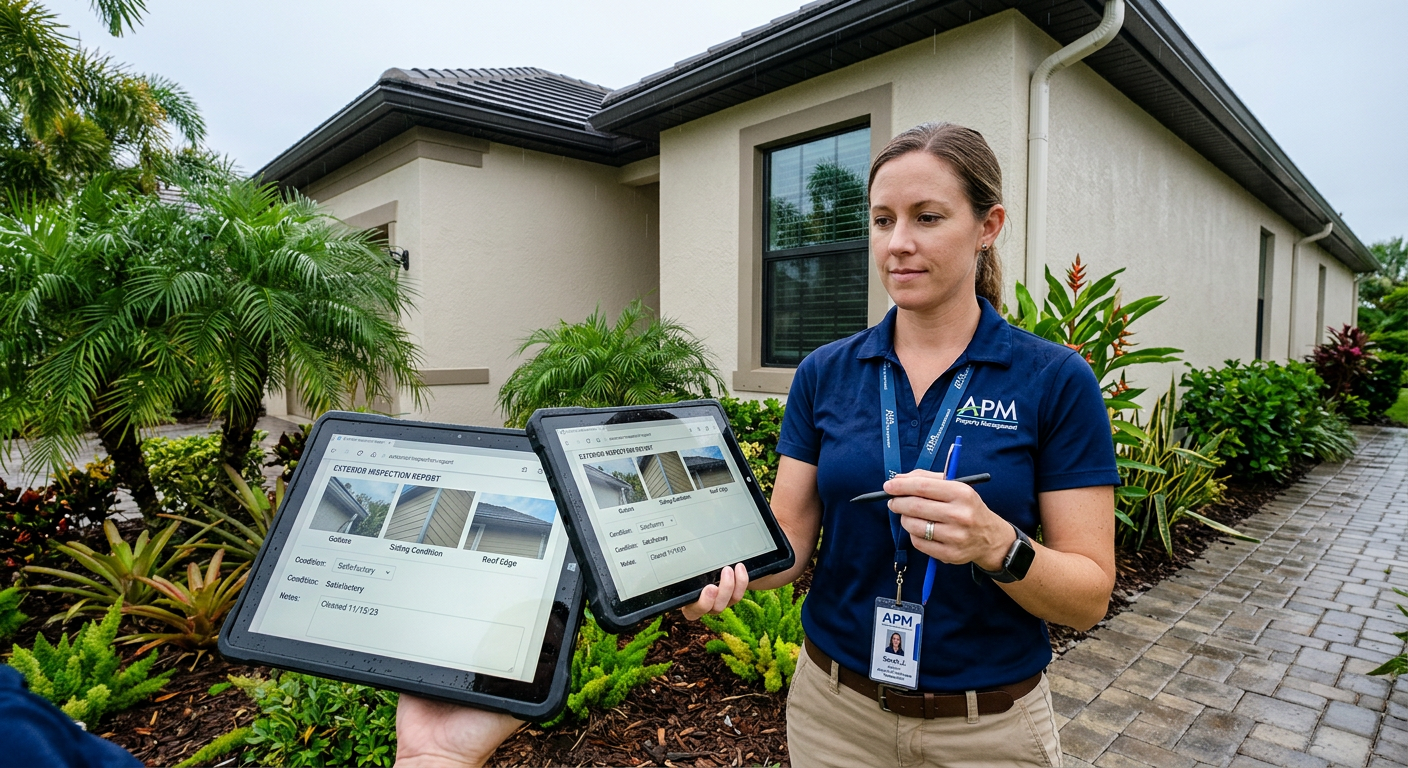
Self-management can work when you live nearby, know the property well, have reliable vendors, and can respond consistently. It is usually a weaker fit when work travel, distance, family obligations, or unfamiliarity with rental compliance makes responsiveness unpredictable.
The decision is not about whether you are capable of answering tenant messages. It is about whether you can do it promptly and consistently over many months, including during a plumbing issue, a storm watch, a vacancy, or a dispute over repairs.
A hybrid approach can also work. You may retain final approval authority while a local team handles leasing, inspections, resident communication, maintenance coordination, and monthly reporting. This can suit owners who want visibility without taking on every operational task themselves.
Questions to Ask Before Hiring a Management Company
The right questions reveal whether a company has systems that match your situation. Ask for specific examples and written policies, not broad assurances.
How quickly will you respond to residents and owners?
A reliable company should define normal business-hour response expectations and its emergency process. Ask who answers after-hours calls and how you will be notified when a repair exceeds your approval threshold.
Can I approve repairs before work begins?
Usually, yes, but the agreement should set a practical emergency limit. Decide in advance what amount can be approved to prevent further damage without waiting for your response.
How do you screen tenants?
The company should use a consistent, documented screening process that complies with applicable housing rules. Ask how income, rental history, credit, identity verification, and occupancy standards are reviewed.
What happens if my home sits vacant?
Ask about pricing reviews, marketing channels, showing access, vacancy inspections, utility oversight, and how often you will receive updates. A manager should not wait silently for an application to appear.
Can the same company help if I decide to sell?
Some management firms only manage rentals, while others can coordinate a transition to sale. If your hold period is uncertain, choose a partner that can explain the handoff process, tenant notice considerations, property preparation, and sales strategy.
Do I need a manager for only one rental home?
One rental can justify professional management when it is remote, association-heavy, high-maintenance, or financially important to your future plans. The size of the portfolio matters less than the consequence of missed details.
Put a Clear Operating Plan Behind Your Rental
If your former home has become a rental, we can help you evaluate its needs before you commit to a management arrangement. Beaches Welcome Service supports long-term rentals, vacation properties, multifamily assets, portfolio oversight, and future buying or selling decisions across South Florida.
Bring us your property location, current condition, association requirements, timeline, and goals. We will help you identify the management structure that gives you practical control without making your rental another full-time job.
Choose a Partner That Makes Ownership Easier
Accidental landlords do not need a generic management package. They need a local operator with transparent fees, disciplined processes, clear reporting, and the ability to manage the property as both a home and a financial asset.
The strongest choice is the company that can handle the details after the lease is signed, not merely market the property before it is occupied. When we compare service scope, compliance practices, communication standards, and local operating knowledge, we can choose a management relationship that supports both the rental income we need and the long-term options we want to keep.

