
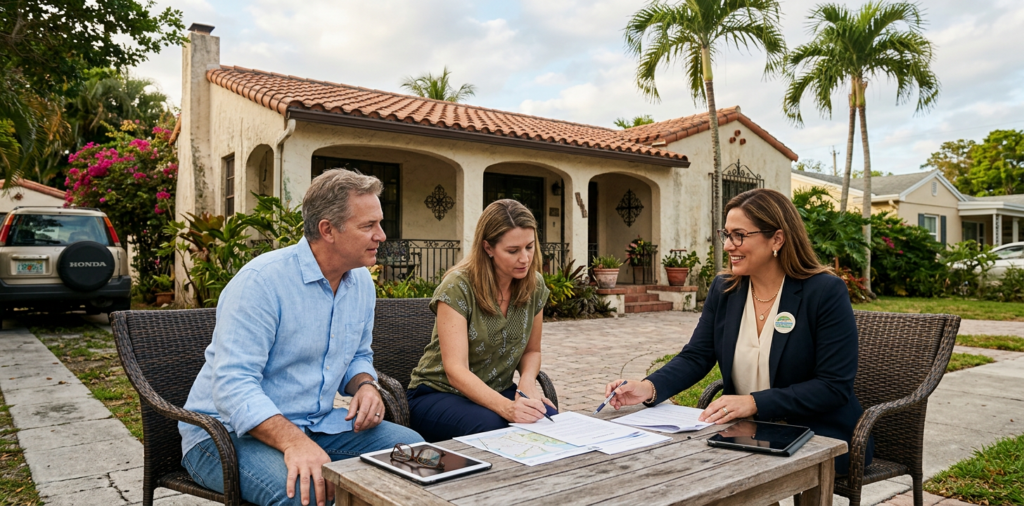
Grief can make even simple property decisions feel heavy. When a family home in West Palm Beach, Delray Beach, Fort Lauderdale, Port Saint Lucie, or another South Florida community becomes part of an estate, the goal is not to rush, it is to make each decision in the right order.
Selling an inherited house in South Florida usually involves three separate tracks: confirming who has authority to sell, preparing the property for its best realistic market, and deciding whether a traditional sale, an as-is sale, or a rental hold produces the strongest result. We recommend separating those decisions so a frustrating legal detail or repair issue does not pressure heirs into accepting the first offer.
Confirm Who Can Legally Sign the Sale
The first question is not what the home is worth. It is who has the legal power to list it, accept an offer, and sign at closing.
In Florida, real estate owned only by the person who died, or owned with another person as tenants in common, may be a probate asset. Joint tenancy with right of survivorship and tenancy by the entirety can produce a different result. Homestead status can also change how ownership passes and how the property must be handled. The Florida Bar’s consumer guide to probate explains why property title, a will, surviving family members, and the estate process all matter.
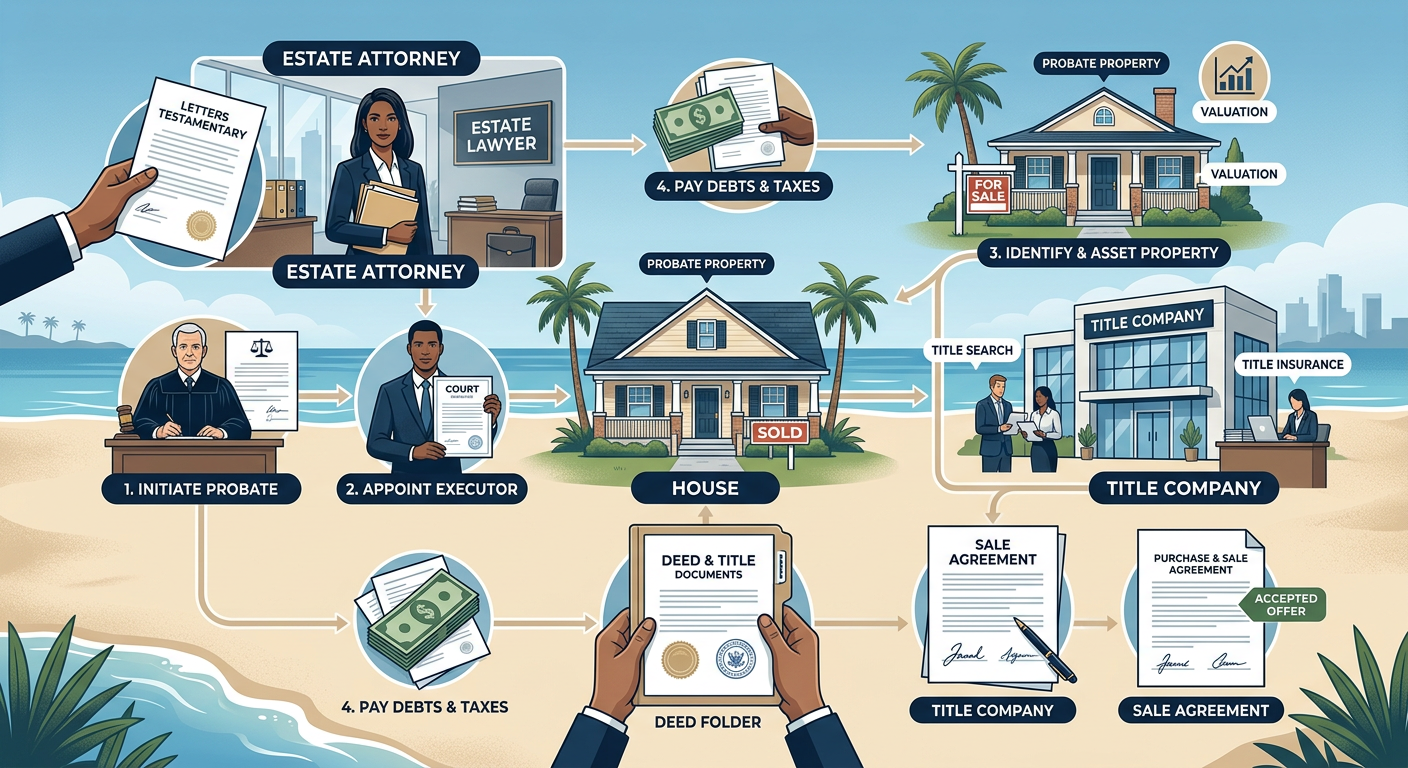
A personal representative, called an executor in many other states, may need letters of administration before acting for the estate. Florida law can allow a personal representative to sell real estate, although the authority and any needed court approval depend on the will, the property’s status, and the facts of the estate. Review the specific authority with a Florida probate attorney before committing to a closing date.
A useful planning fact is that creditors who receive proper notice in a Florida probate administration generally have three months to file a claim. That does not mean every house sale must wait three months, but it shows why the legal timeline and the marketing timeline need to be coordinated rather than guessed. The Florida Bar outlines this part of the process in plain language.
Documents to gather before you list
Create one secure folder for the paperwork a probate attorney, title company, agent, and buyer may request:
- Death certificate and original will, if one exists
- Letters of administration, court orders, or trust documents
- Current deed and recent property tax bill
- Mortgage, HOA, condo, insurance, and utility information
- Repair invoices, permits, warranties, and known defect details
- A record of every heir and any agreement about the sale
The documents do not replace legal advice. They do, however, prevent avoidable title questions from appearing after an offer is already on the table.
Choose the Right Exit Path Before Spending on Repairs
The best sale path depends on condition, holding costs, family goals, and the property’s location. A waterfront-adjacent home in Fort Lauderdale may justify a different investment than a dated rental in Fort Pierce or a condo with pending association assessments in Lake Worth.
| Option | Best fit | Main advantage | Watch closely |
|---|---|---|---|
| Traditional listing | Good condition, time to market | Wider buyer pool | Repairs and showing prep |
| As-is listing | Dated or vacant home | Less upfront work | Price must reflect condition |
| Cash offer | Speed and certainty matter | Fewer financing hurdles | Lower gross offer possible |
| Rent and hold | Strong income potential | Keeps long-term asset | Management and estate complexity |
A traditional listing can produce the best net outcome when the property is clean, marketable, and positioned correctly. An as-is listing can still attract owner-occupants and investors, especially when the home needs a roof, HVAC work, updates, or estate cleanout. A cash buyer can make sense when multiple heirs want a straightforward resolution, the house is vacant, or carrying costs are mounting.
The important comparison is not list price versus cash price. It is net proceeds after repairs, commission, insurance, taxes, utilities, mortgage payments, association fees, cleanup, and time. Our guide to selling a house quickly in South Florida offers a useful framework for comparing speed, preparation, and buyer expectations without assuming the fastest path is automatically the best one.
Handle Taxes and Valuation Early
An inherited home’s tax basis is often tied to its fair market value as of the date of death, not the price the deceased owner paid decades ago. That is why a credible date-of-death valuation can be as important as the listing price.
The IRS explains in Publication 551 that inherited property basis can be determined using its appraised value at the date of death when the relevant estate-tax reporting information is not available. We recommend discussing the valuation, sale timing, and potential gain with a qualified tax professional before distribution, especially when heirs may rent the property, make major improvements, or delay a sale.
Do not confuse a current listing analysis with a date-of-death appraisal. They answer different questions:
- A date-of-death valuation supports tax and estate planning.
- A current market analysis helps establish an asking price and marketing strategy.
- A repair estimate helps determine whether improvements are likely to return more than they cost.
For example, a $12,000 cosmetic refresh might make sense for a clean Delray Beach property with strong buyer appeal. The same spend may not make sense for a Port Saint Lucie house needing larger systems work where buyers will still price in a roof, electrical, or plumbing update.
Address the South Florida Issues Buyers Notice First
South Florida buyers often look past fresh paint if the property file raises uncertainty. We advise heirs to identify the items that affect insurability, financing, association approval, and buyer confidence before the first showing.
Roof, wind, water, and insurance records
Roof age, wind mitigation features, hurricane protection, plumbing materials, electrical panels, and prior water damage can shape both the buyer pool and the offer terms. Gather inspection reports, insurance declarations, repair receipts, permits, and mitigation documentation. If a major issue is known, disclose it accurately and price the home with that reality in mind.
Condo and HOA documentation
For condos and homes in associations, buyers may need approval packages, budgets, rules, application details, and information about assessments. Delays here can threaten an otherwise solid contract. Ask the association early what documents are required and how long the resale or estoppel process takes.
Vacant-home protection
An inherited property left empty can develop small problems quickly. Keep utilities active when appropriate, inspect for leaks and pests, maintain landscaping, secure mail, and verify insurance requirements for vacancy. For out-of-state heirs and snowbirds, this is often the difference between a controlled sale and a last-minute repair scramble.
Keep Heirs Aligned With a Written Decision Plan
A clear process lowers tension and protects the value of the property. Even cooperative families benefit from documenting how decisions will be made.
We suggest agreeing on these points before listing:
- Who communicates with the attorney, agent, title company, and contractors.
- What price range or net-proceeds threshold the group considers acceptable.
- Which repairs, if any, are authorized and how they will be paid.
- How often everyone receives updates.
- What happens if one heir wants to keep or rent the home while others want to sell.
This matters especially when an inherited property could become a rental. A hold strategy should be evaluated like an investment, not treated as a default. Review projected rent, vacancy risk, needed renovations, taxes, insurance, association restrictions, and management costs. Our article on accidental landlord decisions in Florida can help heirs compare a rental plan with a clean sale.
Market the Property to the Buyer It Can Actually Serve
The strongest marketing plan matches the home’s condition to a realistic audience. A fully updated residence may appeal to primary buyers, while a house needing significant work may attract investors, builders, or buyers looking to renovate.
Professional photography, accurate room measurements, clear disclosures, and targeted pricing matter more than overpromising. If the property has genuine advantages, such as a larger lot, a favorable school area, waterfront access, a flexible layout, or proximity to downtown, put them at the center of the presentation. If it needs work, show the opportunity honestly instead of hiding it behind vague language.
South Florida is not one uniform market. Buyers in West Palm Beach, Boynton Beach, Riviera Beach, and Fort Lauderdale may react differently to location, flood exposure, lot size, condo rules, and renovation level. For a broader view of local timing and pricing considerations, review this South Florida home-selling market discussion.
Questions Families Often Ask
Can one heir sell an inherited house without the others?
Usually, no single heir can simply sell the entire property when other heirs have ownership interests. The authority to sell depends on title, probate status, estate documents, and agreement among the parties, so confirm the path with a probate attorney and title professional.
Do we need to finish probate before putting the house on the market?
Not always. Marketing and preparation may be possible before every probate task is complete, but legal authority and title requirements must be in place before closing. Avoid promising a closing date until the estate attorney and title company have reviewed the file.
Is selling an inherited home as-is a bad idea?
No. An as-is sale can be a sensible choice when the property needs extensive repairs, heirs live elsewhere, or speed matters. The tradeoff is that the price and marketing need to clearly reflect the home’s condition.
Should we clean out every item before listing?
Usually, yes, but not before checking for personal records, valuables, original estate documents, and items named in the will. Once those issues are resolved, a thorough cleanout and deep cleaning help buyers see the space rather than the family’s belongings.
Will we owe capital gains tax if we sell soon after inheriting?
Possibly, but the result depends on the inherited basis, selling costs, improvements, and final sale price. A timely sale near the date-of-death value may limit taxable gain, but heirs should obtain individualized tax advice before filing.
What if the inherited house has a mortgage?
A mortgage does not automatically prevent a sale, but the payoff amount, ongoing payments, and lender requirements must be reviewed early. The closing agent typically coordinates payoff from sale proceeds, subject to the estate’s authority and title requirements.
Get a Clear Sale Plan Before You List
A well-run inherited property sale is built on sequencing, not pressure. Confirm authority, document the property, determine a defensible value, compare your real net options, and then market the house to the right buyer group.
If you need local support in deciding whether to sell, renovate, rent, or position an estate property as-is, Beaches Welcome Service can help you evaluate the property and create a focused South Florida plan. Start with the facts, the family’s goals, and a clear timeline, then move forward with confidence.
The Best Outcome Is a Decision You Can Defend
The right answer is rarely the highest offer printed on day one. It is the sale path that respects probate requirements, protects the property while it is in transition, accounts for taxes and carrying costs, and gives every decision-maker a clear view of the numbers.
When we approach inherited real estate with patience and structure, selling becomes less about clearing a house and more about protecting a family asset. That is the standard worth using, whether the home is a longtime residence, a second home, or a rental property with a future beyond the estate.

