

Distance can make a good rental property feel far more complicated than it should. A late-night maintenance call, a vacant unit after a lease ends, or an unexpected storm warning can quickly become stressful when you are several states away.
That is why Fort Pierce property managers for out-of-state owners need to offer more than rent collection. We believe remote owners need clear reporting, responsive local coordination, thoughtful tenant placement, and an accountable plan for protecting the asset between visits. Whether you are an investor, a snowbird, an accidental landlord, or overseeing a growing portfolio, the goal is the same: stay informed without having to manage every detail yourself.
Fort Pierce also has a meaningful base of housing and seasonal ownership. The U.S. Census Bureau reports that the city had 18,878 households in its latest five-year estimates, while 20.8% of residents were age 65 or older. For owners with seasonal homes and long-term rentals, that makes dependable local operations especially valuable.
What Remote Owners Need From a Fort Pierce Manager
| Need | What Good Management Looks Like | Why It Matters From Afar |
|---|---|---|
| Communication | Clear monthly updates | You stay in control |
| Leasing | Pricing and tenant screening | Less vacancy risk |
| Maintenance | Local vendor coordination | Faster issue resolution |
| Inspections | Documented property checks | Fewer surprises |
| Financial clarity | Income and expense reporting | Better investment decisions |
A manager should act as your eyes and ears on the ground, not as a wall between you and your property. We recommend asking early how often you will receive updates, what documentation accompanies repair approvals, and who handles urgent situations outside regular business hours.
A strong operating relationship is built around agreed decision limits. For example, you may authorize routine repairs up to a set dollar amount, while requiring approval for larger work. That lets urgent issues move quickly without giving up oversight.
Local Presence Is the Real Value
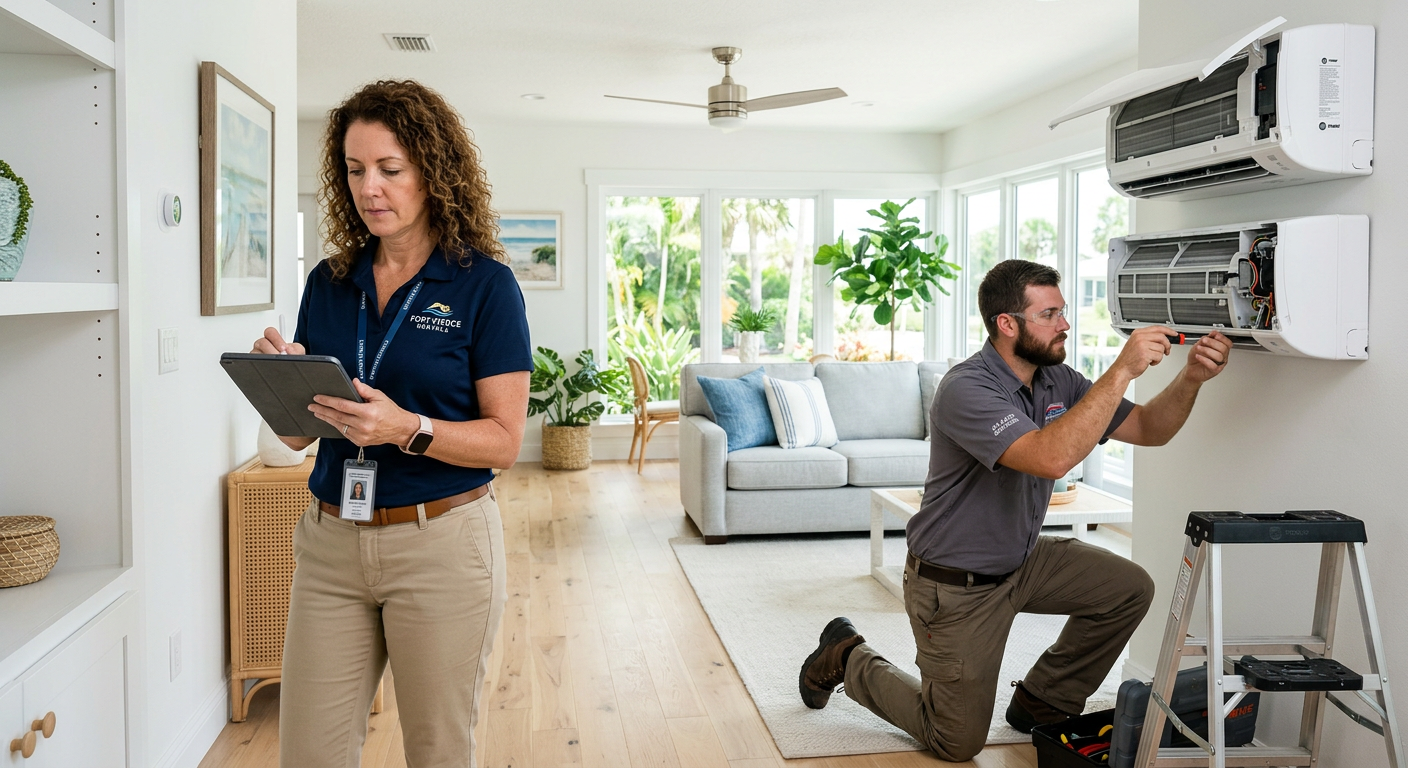
Software makes communication easier, but it cannot walk a property, meet a vendor, verify a repair, or prepare a home for a new resident. Local knowledge matters when a property needs a quick assessment after heavy rain, an air-conditioning issue emerges in the Florida heat, or a prospective tenant asks to see the home.
We suggest choosing a manager with defined inspection practices, established local vendor relationships, and a process for documenting property condition. Photos, written notes, invoices, and owner updates should work together to create a clean record of what happened and why.
How We Evaluate Property Management Services
The right fit depends on the property type, your goals, and how involved you want to be. A long-term single-family rental, a small multifamily building, and a seasonal vacation home each require a different operating rhythm.
Leasing and Tenant Placement
Vacancy is expensive, especially when you live far away and cannot personally handle showings. Ask prospective managers how they assess rental pricing, market the property, handle inquiries, verify applicants, and document move-in condition.
A low management fee does not automatically create the best value if it comes with slow leasing or weak screening. We encourage owners to focus on the full picture: expected rent, days vacant, quality of applicant review, lease administration, and communication after placement.
For more detail on the local leasing process, our guide to finding a good tenant in Fort Pierce explains the practical checks remote owners should expect.
Maintenance Coordination and Asset Protection
Maintenance is where remote ownership can either run smoothly or become frustrating. A good manager should distinguish between true emergencies, routine repairs, and larger capital needs, then communicate the recommended path clearly.
We like a simple maintenance framework:
- Establish an approval threshold before the management agreement begins.
- Require photos and a written scope for non-routine repairs.
- Ask whether vendor invoices are shared with owners.
- Confirm who verifies completed work.
- Build a reserve so urgent issues do not become delayed decisions.
This is not about approving every small item. It is about creating a process that preserves speed, accountability, and the condition of your investment.
Financial Reporting That Helps You Make Decisions
Remote owners should not have to decode vague statements or wait until tax time to understand performance. Monthly reporting should make rent received, management costs, repairs, reserves, and owner distributions easy to review.
For a single home, that may be enough. For investors with several units across Fort Pierce, Port Saint Lucie, West Palm Beach, Boynton Beach, Delray Beach, Fort Lauderdale, Lake Worth, or Riviera Beach, the manager should also help organize property-level performance. Clear reporting supports better decisions about rent adjustments, renovations, refinancing, and future acquisitions.
Fort Pierce Rental Rules Can Affect Your Plan
Your intended rental strategy matters before you hire a manager. Long-term leasing and short-term stays have different requirements, operating costs, guest or resident expectations, and compliance responsibilities.
The City of Fort Pierce states that rentals for periods of less than six months are subject to short-term and vacation rental standards. Its official guidance notes an initial registration fee of $350 per unit, along with other standards that owners should review before listing a home for short stays. Visit the City of Fort Pierce short-term rental guidance before making a revenue projection or signing a management agreement.
For a deeper look at the local considerations, see our resource on Fort Pierce short-term rental rules. If your property is better suited to a resident lease, keep the management conversation centered on stable occupancy, resident service, property condition, and long-term income rather than nightly-rate projections.
Questions to Ask Before Signing a Management Agreement
Here is the thing: the best questions are not about a manager's sales pitch. They are about how the company performs when something goes wrong.
How quickly will we hear about maintenance issues?
Ask for examples of the communication process for a leaking pipe, failed air conditioning, appliance problem, or storm-related concern. Clarify what is handled immediately, what requires your approval, and how updates are delivered.
How often will the property be inspected?
There is no universal schedule that fits every property. Still, your agreement should explain when inspections occur, what is checked, and whether you receive written documentation with photos.
Who approves vendors and verifies repair quality?
A manager may use in-house staff, preferred vendors, or a mix of both. What matters is transparency around cost, scope, timing, and confirmation that the work was completed properly.
How are rents set and adjusted?
A reliable manager should explain the comparable-rental process, market positioning, listing strategy, and the timing for reviewing rent at renewal. Avoid anyone who promises a number without discussing the home's condition, location, amenities, and competition.
What happens if a resident does not pay rent?
Ask about the collection process, notices, legal coordination, owner communication, and anticipated costs. A direct answer helps you assess whether the company has a disciplined process rather than an improvised response.
Can the manager support both long-term and vacation rentals?
Some companies specialize in one model, while others offer both. If you are weighing a seasonal strategy, ask whether they understand Fort Pierce registration requirements, guest operations, cleaning standards, and local enforcement expectations.
A Practical Plan for Out-of-State Ownership
We have found that remote ownership gets easier when owners build a repeatable operating plan instead of responding to each event from scratch. Start with a written property profile that includes insurance details, utility accounts, warranty information, vendor contacts, appliance records, and any community rules.
Next, decide what success means for the asset. Is the priority monthly cash flow, preserving a future retirement home, improving a multifamily property's performance, or preparing for a sale in a few years? Your management approach should match that purpose.
If you need a broader framework, our article on managing a rental property from another state outlines the systems that help owners stay organized while delegating daily work locally.
Put Local Support Behind Your Fort Pierce Investment
If you own from a distance, we can help you build an operating plan around long-term rental management, vacation rental operations, single-family homes, multifamily properties, and portfolio oversight. Explore Beaches Welcome Service to discuss a Fort Pierce management approach that keeps communication, maintenance, leasing, and asset care aligned with your goals.
The Bottom Line for Remote Fort Pierce Owners
The right property manager should make ownership feel more organized, not more opaque. You should know how the home is performing, what work is being done, what decisions need your input, and who is accountable locally when something changes.
For investors and owners outside Florida, a professional management relationship is not about giving up control. It is about putting dependable systems and local people in place so your Fort Pierce property can be managed with the attention it deserves.

