

A rental home can look profitable on its own while quietly weakening the larger investment plan. A vacancy, insurance increase, delayed roof repair, or below-market lease may be manageable in isolation, but across several homes, those small gaps can compound quickly.
That is why portfolio asset management for single-family rentals in Florida matters. We help owners look beyond rent collection and assess each home’s role in cash flow, risk, capital planning, and eventual sale strategy. This approach is valuable for investors, accidental landlords, snowbirds, and private equity groups from West Palm Beach to Port Saint Lucie.
Florida’s rental landscape also requires active analysis. The Florida Housing 2025 Rental Market Study reported that Florida added more than 240,000 renter-occupied multifamily homes from 2019 through 2023, while single-family and mobile-home rentals declined by 46,000 units. For single-family owners, that adds urgency to disciplined pricing, resident retention, property condition, and clear differentiation.
Portfolio Asset Management for Single-Family Rentals in Florida
| Focus area | Daily property management | Portfolio asset management | Owner benefit |
|---|---|---|---|
| Leasing | Fill one vacancy | Compare lease performance | Better income stability |
| Maintenance | Fix active issues | Plan capital needs | Fewer costly surprises |
| Financials | Produce monthly records | Assess property-level results | Better capital decisions |
| Market strategy | Set a rent | Rank assets by opportunity | Clearer hold or sell plan |
Property management keeps each home operating. Asset management asks whether the home is helping the entire portfolio meet its goals. We need both disciplines, especially when a portfolio spans different cities, price points, tenant profiles, or ownership entities.
For example, a home in Delray Beach may have premium rent potential but higher upkeep expectations. A similar-sized home in Port Saint Lucie may support a steadier family-renter strategy and a different maintenance budget. Treating both homes with the same playbook can leave money, time, and flexibility on the table.
Build a Portfolio Scorecard Before Making Big Decisions
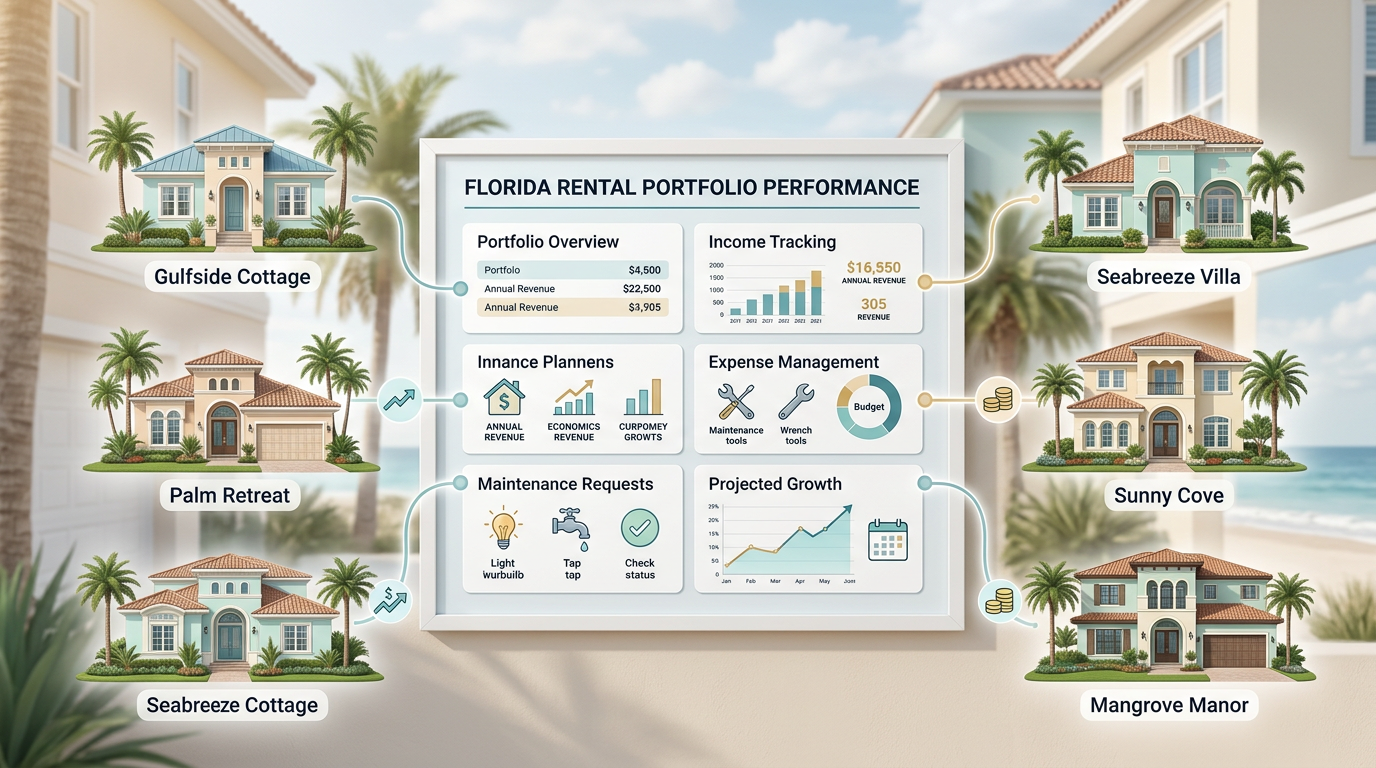
We begin with a simple rule: every home needs a scorecard. The point is not to create more paperwork. It is to make the next decision easier, whether that decision is a lease renewal, renovation, refinance, acquisition, or sale.
Track the metrics that shape real performance
At minimum, we recommend reviewing these figures for every home each month:
- Scheduled rent and actual collected rent
- Vacancy loss and days listed before leasing
- Lease expiration dates and renewal likelihood
- Repair costs by category and by home
- Insurance, taxes, association fees, and utilities
- Net operating income and cash flow after reserves
- Capital projects due within the next one to three years
- Market rent compared with the in-place lease
A property can have a strong gross rent number and still underperform after maintenance, insurance, association costs, and vacancy are included. A portfolio scorecard makes these differences visible early, when there are still choices.
Rank homes by role, not just by revenue
We like to place each asset into one of four practical groups: core hold, improve, watch, or sell candidate. A core hold has stable income and manageable future costs. An improve asset has a clear path to stronger rent or lower operating expense. A watch asset needs closer review, while a sell candidate may no longer fit your capital goals.
This is particularly helpful for accidental landlords. If a former primary home has high equity but thin cash flow, keeping it may not be the strongest move. Our guide to real estate portfolio asset management explains how a portfolio-wide view can make that decision less emotional and more practical.
Match Each Florida Market to the Right Business Plan
South Florida is not one rental market. West Palm Beach, Boynton Beach, Delray Beach, Fort Lauderdale, Lake Worth, Riviera Beach, Fort Pierce, and Port Saint Lucie each have different resident demand patterns, pricing pressure, home ages, and operating costs.
Florida REALTORS reported that the Miami-Fort Lauderdale-West Palm Beach metro area recorded 39,410 single-family sales in 2025, with a median sale price of $400,000. That figure was 3 percent lower than the prior year, a reminder that asset values and acquisition plans need local context rather than broad statewide assumptions. Read the full Florida REALTORS 2025 market report for metro-level data.
Income-focused locations
Port Saint Lucie, Fort Pierce, Lake Worth, and Riviera Beach can appeal to owners seeking more accessible basis or a value-add path. The key is detailed due diligence on the specific neighborhood, resident profile, property condition, and insurance exposure.
Appreciation and lifestyle locations
Delray Beach, Fort Lauderdale, and selected parts of West Palm Beach often attract owners focused on long-term value, premium resident appeal, or a flexible future sale. These homes may need a sharper standard for finishes, landscaping, response times, and leasing presentation.
Balanced portfolio locations
Boynton Beach and West Palm Beach can work well for owners who want a mix of renter depth, sale liquidity, and steady long-term demand. Before buying or expanding, use our local guide to the best places to buy rental property in South Florida as a starting point for matching city, asset type, and objective.
Protect Cash Flow With Proactive Operations
Here’s the thing: a portfolio plan only works when daily operations support it. A good acquisition decision can be undermined by slow leasing, inconsistent resident qualification, surprise repairs, or weak expense controls.
Treat lease dates as a planning tool
We review lease end dates well before they arrive. That gives us time to assess market rent, resident payment history, renewal terms, home condition, and any planned work. Coordinating lease dates across the portfolio can also prevent too many vacancies from landing in the same period.
Resident quality matters just as much as asking rent. Clear, lawful screening criteria, income verification, rental history review, and consistent documentation reduce avoidable risk. Our resource on how to screen tenants for a rental property outlines a process that supports fair, repeatable leasing decisions.
Create a maintenance and capital calendar
Florida heat, humidity, storms, salt air, irrigation, and aging building systems can accelerate wear. We separate routine repairs from capital planning so a failed appliance does not get confused with a roof, HVAC, drainage, exterior paint, or impact-protection project.
A useful capital calendar lists anticipated projects, rough cost ranges, timing, and the reason for the work. It also identifies which improvements can support rent growth, reduce insurance exposure, preserve resale appeal, or prevent a larger repair later.
Decide When to Hold, Improve, or Sell
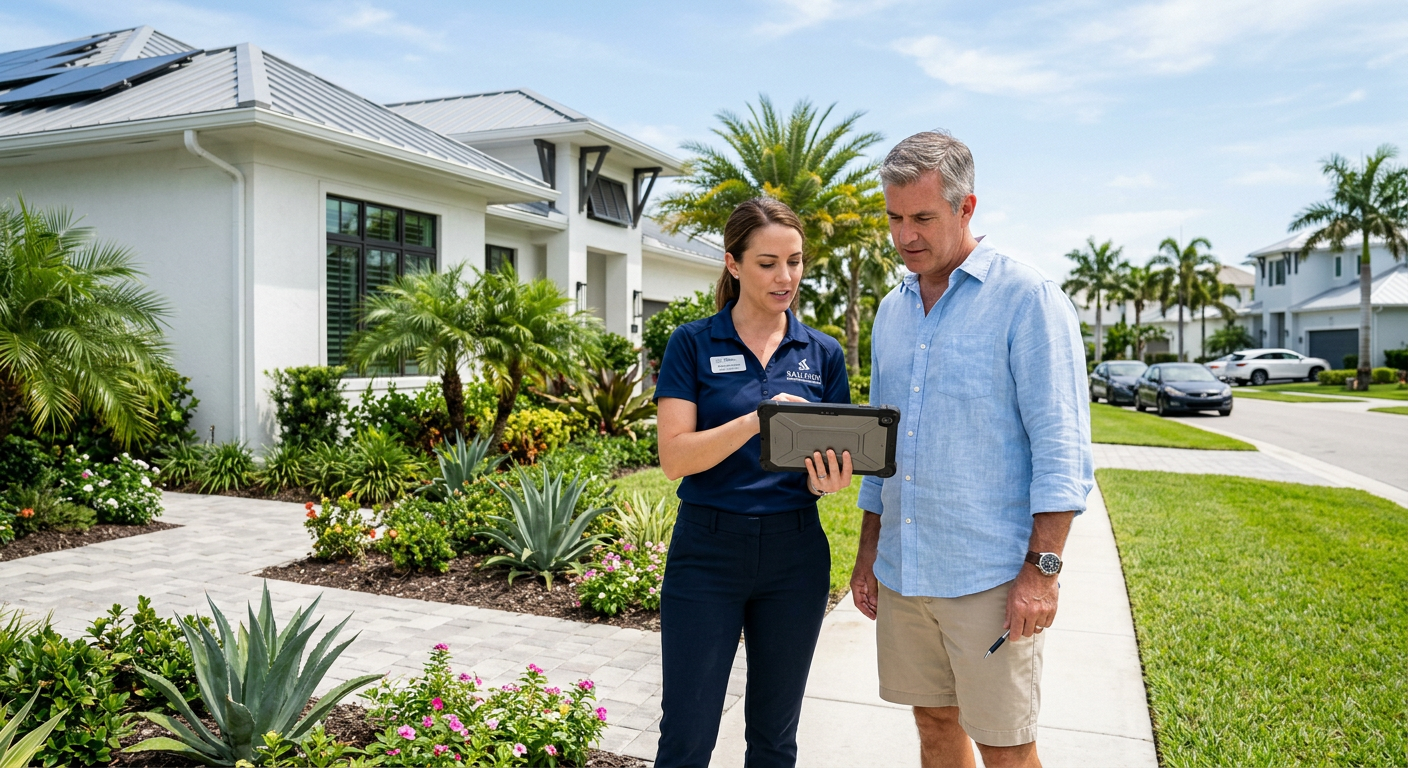
Not every property deserves the same answer. Some homes produce dependable income and should remain core holdings. Others may benefit from targeted upgrades, while a few can be stronger sale candidates because equity is high, costs are rising, or the property no longer fits the portfolio.
We assess each decision with a few direct questions:
- Is market rent meaningfully above the current lease?
- Can a defined upgrade create enough income to justify its cost?
- Are insurance, taxes, or repairs reducing the home’s future value to us?
- Would sale proceeds create a better opportunity elsewhere?
- Does this property still fit our desired level of risk and management intensity?
Snowbirds often have an added question: does the home need to remain available for personal use? That can be a perfectly valid goal, but it should be reflected in the income plan, lease structure, maintenance timing, and exit strategy from day one.
Use Clear Reporting for Better Owner Decisions
For a small investor, a clean monthly dashboard may be enough. For a private equity group or family office, we may need property-level budgets, variance explanations, capital plans, market updates, and ownership reporting that aligns with the investment thesis.
The best reports answer three questions quickly: What happened, why did it happen, and what action should we take next? If a home missed its income goal, the report should identify whether the cause was vacancy, lease rate, repairs, delinquency, or an unusual expense.
A capable management partner should also separate operational activity from strategic advice. You can review the difference between these roles through our property management services and asset oversight resources, then decide how much support your portfolio needs.
Frequently Asked Questions
Is asset management worthwhile for only one or two rentals?
Yes. Even a single home can benefit from a portfolio mindset when you include personal assets, future purchases, available equity, and sale goals. The focus is on making deliberate choices instead of reacting to each issue as it arises.
How often should we review a single-family rental portfolio?
We recommend a monthly operational review and a deeper strategic review at least every three months. A major insurance renewal, lease expiration, storm event, or potential acquisition may justify an additional review.
Which metrics matter most for a Florida rental home?
Actual collected rent, vacancy, repair spending, insurance, taxes, market rent, lease expiration, and expected capital needs are core metrics. The right mix depends on whether your priority is income, appreciation, flexibility, or a future sale.
Can asset management help us choose between long-term and vacation rentals?
Yes, but the analysis should include local rules, occupancy expectations, cleaning and maintenance intensity, personal-use needs, and operating risk. Higher gross revenue does not always create stronger net income after all costs are included.
What is the biggest mistake owners make with rental portfolios?
Many owners focus on rent while underestimating vacancy, deferred maintenance, insurance changes, and capital needs. A home is not performing well simply because rent arrives each month.
Should we sell a rental if expenses rise?
Not automatically. We first compare the home’s future income potential, expected repairs, equity position, tax considerations, and alternatives for the sale proceeds. Sometimes an upgrade or revised lease strategy is more effective than a sale.
Put Your Florida Portfolio on a Clearer Path
If you own homes in South Florida and want a more disciplined plan for income, maintenance, leasing, and future sales, Beaches Welcome Service can help. We provide local property management, portfolio oversight, asset planning, and real estate support built around your goals, not a generic template.
Start with a practical review of each home, its financial role, and the next best action. A clear plan can reduce uncertainty while helping us protect both income and long-term value.
Conclusion
A successful single-family rental portfolio is built through consistent, informed decisions. We track performance at the home level, assess risk across the full group of assets, plan capital work early, and keep every property connected to a larger objective.
Whether you own one former residence in Lake Worth, several rentals across Palm Beach County, or a larger group of homes stretching into Broward and St. Lucie counties, the same principle applies. When we manage each property as part of a wider plan, we gain stronger cash flow visibility, more control over risk, and a clearer path forward.

