

A rental property should create dependable income, not another full-time job. Yet owners across West Palm Beach, Boynton Beach, Delray Beach, Fort Lauderdale, Port Saint Lucie, Fort Pierce, Lake Worth, and Riviera Beach often discover that a lease is only the beginning of the work.
That is why long term rental management south florida is ultimately an operating system, not simply rent collection. We combine practical leasing, thoughtful resident communication, preventive maintenance, clear financial controls, and local market awareness to protect both cash flow and the underlying asset.
The broader rental environment makes disciplined management even more important. The Florida Housing Finance Corporation reports that statewide median gross rent increased from $1,238 in 2019 to $1,719 in 2023, a 39 percent rise. That history is a reminder for owners to price with evidence, not assumptions, while delivering a well-maintained home that qualified residents want to renew.
What Effective Rental Management Covers
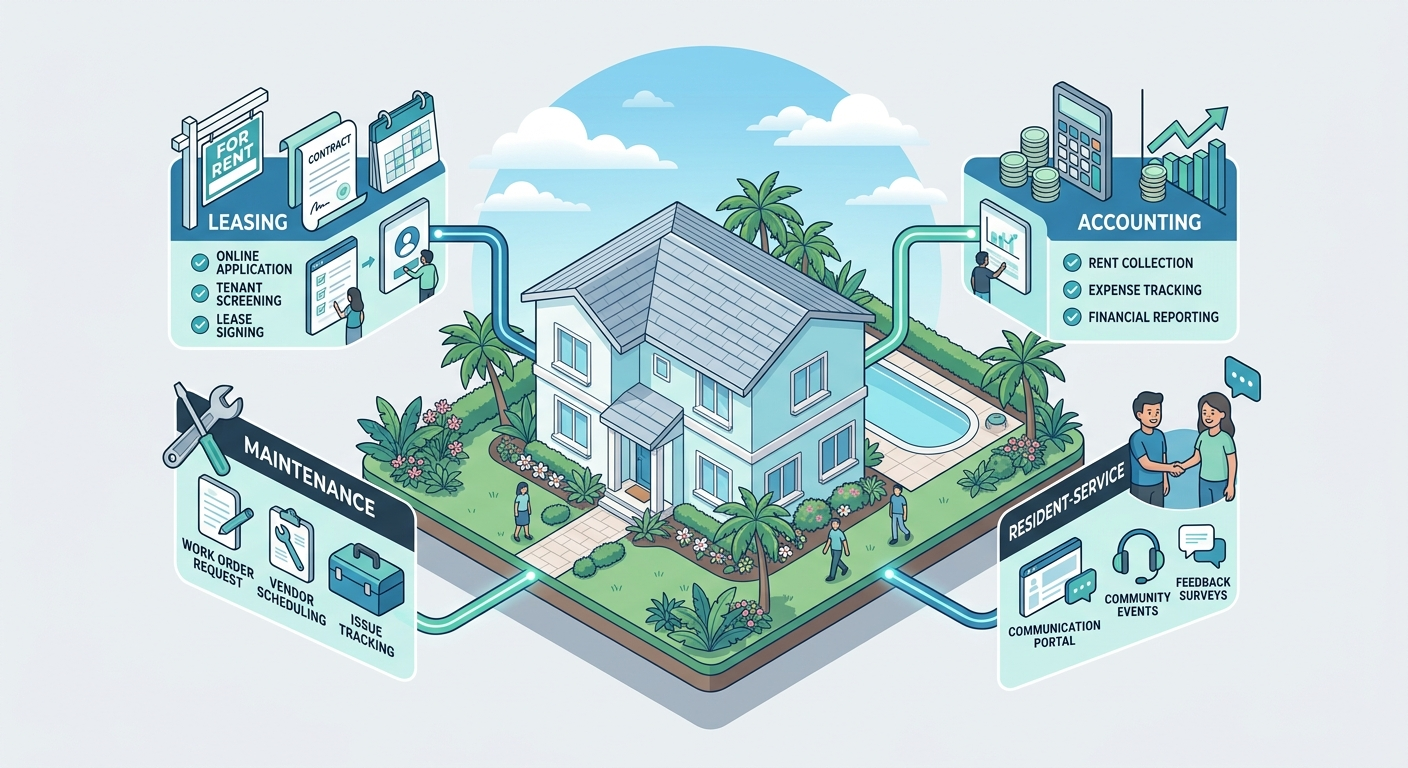
A capable manager does more than place a tenant. The work connects every stage of the resident lifecycle, from rent positioning and marketing through move-out accounting and readiness for the next lease.
| Management Area | What It Protects | What Owners Should Expect |
|---|---|---|
| Leasing | Occupancy and rent | Market-based pricing, quality listings, showings |
| Screening | Payment reliability | Consistent income, credit, and rental-history review |
| Maintenance | Asset condition | Fast triage, trusted vendors, preventive planning |
| Accounting | Financial visibility | Owner statements, rent tracking, expense records |
| Compliance | Risk control | Proper notices, deposits, lease documentation |
For a single-family home, this may mean coordinating a roof inspection before storm season and responding quickly to an air-conditioning issue. For a multi-family asset, it can mean vendor oversight, unit-turn planning, collections reporting, and standardized resident service across the property.
Pricing Is a Decision, Not a Guess
We start with current comparable rentals, not the rent a neighbor received last year. A three-bedroom home near downtown West Palm Beach will attract a different renter pool than a condo in Delray Beach or a duplex in Fort Pierce. Condition, parking, pet policies, school access, laundry, outdoor space, building rules, and move-in timing all influence demand.
Overpricing usually costs more than it appears to. A home that sits vacant for several weeks can lose more income than a modest adjustment in asking rent, especially once carrying costs, utilities, and turnover expenses are considered. The goal is not simply the highest advertised price. It is qualified occupancy and durable net income.
Screening Protects the Entire Lease
A strong screening policy should be applied consistently and documented carefully. We recommend verifying identity, income, employment or other reliable income sources, rental history, credit profile, and the complete application information permitted by law.
Screening is also about fit. A resident who understands the lease, can comfortably support the rent, and receives prompt communication is more likely to treat the property well and remain longer. That lowers avoidable turnover, which is one of the largest hidden expenses in rental ownership.
Build a South Florida Plan Around the Property
There is no single playbook for every rental in this market. Snowbirds may value a low-touch ownership experience and scheduled property checks. Accidental landlords may need help deciding whether a long-term lease is better than a seasonal strategy. Investors and private equity teams usually need standardized reporting that makes portfolio performance easier to review.
For owners still deciding how to position a home, our guide on renting your house in South Florida walks through the core choices between long-term, seasonal, and short-term use. A long-term lease often works best when stable occupancy, reduced turnover, and predictable operations matter more than chasing peak seasonal revenue.
Account for Climate, Insurance, and Building Rules
South Florida ownership requires a practical maintenance calendar. Air-conditioning systems, roofs, plumbing, exterior drainage, landscaping, pest control, hurricane preparation, and moisture prevention should never be handled only after a problem becomes urgent.
Condo and HOA rules deserve equal attention. Before advertising, verify leasing restrictions, application timing, minimum lease terms, parking policies, pet requirements, elevator reservations, and move-in fees. A polished listing cannot overcome a delayed association approval or a lease term that conflicts with building requirements.
Treat Maintenance as Asset Preservation
The cheapest repair is not always the least expensive decision. Delayed water-leak repairs, neglected HVAC service, poor caulking, and unresolved drainage issues can create far larger bills and resident frustration later.
We recommend a documented process for maintenance requests: acknowledge the issue, determine urgency, communicate next steps, dispatch the right vendor, confirm completion, and retain photos and invoices. This keeps owners informed without requiring them to coordinate every service call from another state or another country.

Keep Financial Controls Clear and Consistent
Good management should make financial performance easier to understand. We encourage owners to review monthly income, collected rent, maintenance spending, owner draws, reserve balances, vacancy periods, and upcoming capital needs. For portfolios, the same reporting standards should be used across every property so decisions are comparable.
A simple operating reserve can prevent a minor repair from becoming a stressful cash-flow surprise. It is also wise to separate routine maintenance from capital projects, such as a roof replacement, major appliance upgrade, or large plumbing repair. That distinction gives investors a more honest view of net operating performance.
Security deposits require special care. Florida law outlines how a landlord or agent must hold deposit money or advance rent and sets procedures for deposit claims. Owners should review the official Florida Statutes section on security deposits and use a documented, compliant process from move-in through move-out.
How to Evaluate a Property Manager
The best fit is not always the manager with the lowest advertised fee. Ask how the company performs when a tenant is late, an air conditioner fails on a holiday weekend, a lease renewal needs negotiation, or a property faces an unexpected vacancy.
Questions Worth Asking
- How do you determine the initial rental price and renewal rate?
- What does the screening process include, and who makes the final approval decision?
- Who answers maintenance requests after business hours?
- Are maintenance markups, leasing fees, renewal fees, inspection fees, or onboarding charges separate?
- How often will we receive statements, inspection updates, and performance reports?
- Do you have experience with our property type, neighborhood, and HOA or condo requirements?
- What is your process for move-in documentation and security-deposit accounting?
Fee structures vary. Some firms charge a percentage of collected rent plus a leasing fee, while others use flat monthly pricing with separate charges for renewals, inspections, or maintenance coordination. Compare the full scope of services, reporting quality, local availability, and vendor process before deciding.
Owners who want a deeper comparison can review our practical guide to single-family rental management in South Florida and our perspective on asset management and portfolio oversight. The right relationship should give you accountability and visibility, not simply remove tasks from your calendar.
Common Mistakes That Reduce Returns
The first mistake is setting rent based on optimism. The second is accepting an incomplete application because the unit has been vacant longer than expected. Both decisions can look convenient in the moment and become expensive later.
Another common issue is treating resident communication as an interruption instead of a retention tool. Clear expectations, timely responses, and respectful handling of maintenance requests support better outcomes for everyone. A resident does not need every request approved, but they do need a timely, professional answer.
Finally, do not confuse gross rent with investment performance. Track vacancy, leasing costs, repairs, insurance, taxes, HOA expenses, and capital reserves. The property with the highest headline rent is not always the property producing the strongest long-term return.
Frequently Asked Questions
What does long-term rental management usually include?
Most full-service arrangements include rent pricing, marketing, showings, applicant screening, lease preparation, rent collection, maintenance coordination, owner statements, renewal support, and move-out administration. Exact services and fees vary, so request a written management agreement before signing.
How long should a long-term lease be in South Florida?
A 12-month lease is common because it supports predictable occupancy and reduces turnover. The best term depends on the property, local demand, HOA rules, owner plans, and whether the home may later be used by a snowbird or prepared for sale.
Can we manage a South Florida rental while living out of state?
Yes, but remote ownership works best with local support, detailed documentation, a reliable maintenance network, and regular reporting. A local manager can handle showings, inspections, emergencies, vendor access, and resident communication while you retain decision-making authority.
How much should we budget for rental maintenance?
The right amount depends on the home’s age, condition, systems, location, and tenant responsibilities. Instead of relying on a single percentage, review prior expenses, inspect major systems, and maintain a reserve for both routine work and large capital items.
Should we choose long-term or short-term rental use?
Choose based on your goals, regulatory environment, building rules, risk tolerance, and available time. Long-term rentals generally offer more predictable occupancy and fewer turnovers, while short-term use may involve higher operational intensity, more frequent cleaning, and additional local compliance considerations.
What should we do before a tenant moves in?
Complete a detailed condition report with photos, confirm utilities and keys, review resident responsibilities, verify required association approvals, test safety devices, and document how maintenance requests will be handled. A thorough move-in process reduces disputes later.
Put Your Rental on a Clearer Path
If you own a single-family home, multi-family building, or growing portfolio, we can help you build an operating plan around your property and goals. Visit Beaches Welcome Service to discuss long-term rental management, local leasing support, asset oversight, or a future purchase or sale strategy across South Florida.
The Bottom Line
Successful long-term rentals are built on repeatable decisions: price accurately, screen consistently, communicate clearly, maintain proactively, and measure net performance. Those fundamentals matter whether you own one Lake Worth condo, a Fort Lauderdale duplex, or a wider portfolio spanning Palm Beach, Broward, and the Treasure Coast.
When we manage the details with discipline, rental ownership becomes more predictable and the property has a better chance to hold its value over time. Start with an honest assessment of your lease strategy, property condition, expenses, and support system, then make each next decision with the full investment picture in view.

