

Owning real estate becomes more complex the moment a property has to work alongside other assets, personal goals, debt obligations, and market conditions. A rental home might produce income, but it still needs a clear role in the bigger picture.
That is why what is portfolio oversight in real estate is an important question for investors, accidental landlords, snowbirds, and private equity groups. Portfolio oversight creates a disciplined way to measure performance, direct capital, reduce avoidable risk, and decide what each property should do next.
Portfolio Oversight Means Managing the Whole Investment Picture
Portfolio oversight is the strategic supervision of a group of real estate assets, or even one significant asset, to keep decisions aligned with financial goals. We look beyond collecting rent or coordinating repairs and ask whether every property is producing the income, stability, and long-term value the owner expects.
For a South Florida owner, that can mean comparing a Delray Beach condo with a Port Saint Lucie rental home, deciding whether a Lake Worth duplex needs renovation funding, or reviewing whether a Fort Lauderdale vacation property still fits the plan. The focus is not activity for its own sake. It is making informed choices with complete financial and operational visibility.
| Area of focus | Property management | Portfolio oversight |
|---|---|---|
| Daily work | Leasing, repairs, rent collection | Direction and accountability |
| Financial lens | Property-level income and costs | Portfolio cash flow and capital allocation |
| Primary question | Is the home operating well? | Is the asset advancing the owner’s goals? |
| Typical cadence | Daily and weekly | Monthly, quarterly, and annual |
| Major decisions | Vendor and tenant actions | Hold, improve, refinance, buy, or sell |
Portfolio oversight often works alongside hands-on property management services. The property manager keeps operations moving, while the oversight function connects those details to investor priorities, reserves, financing, and exit planning.
The Core Work Behind Effective Real Estate Oversight
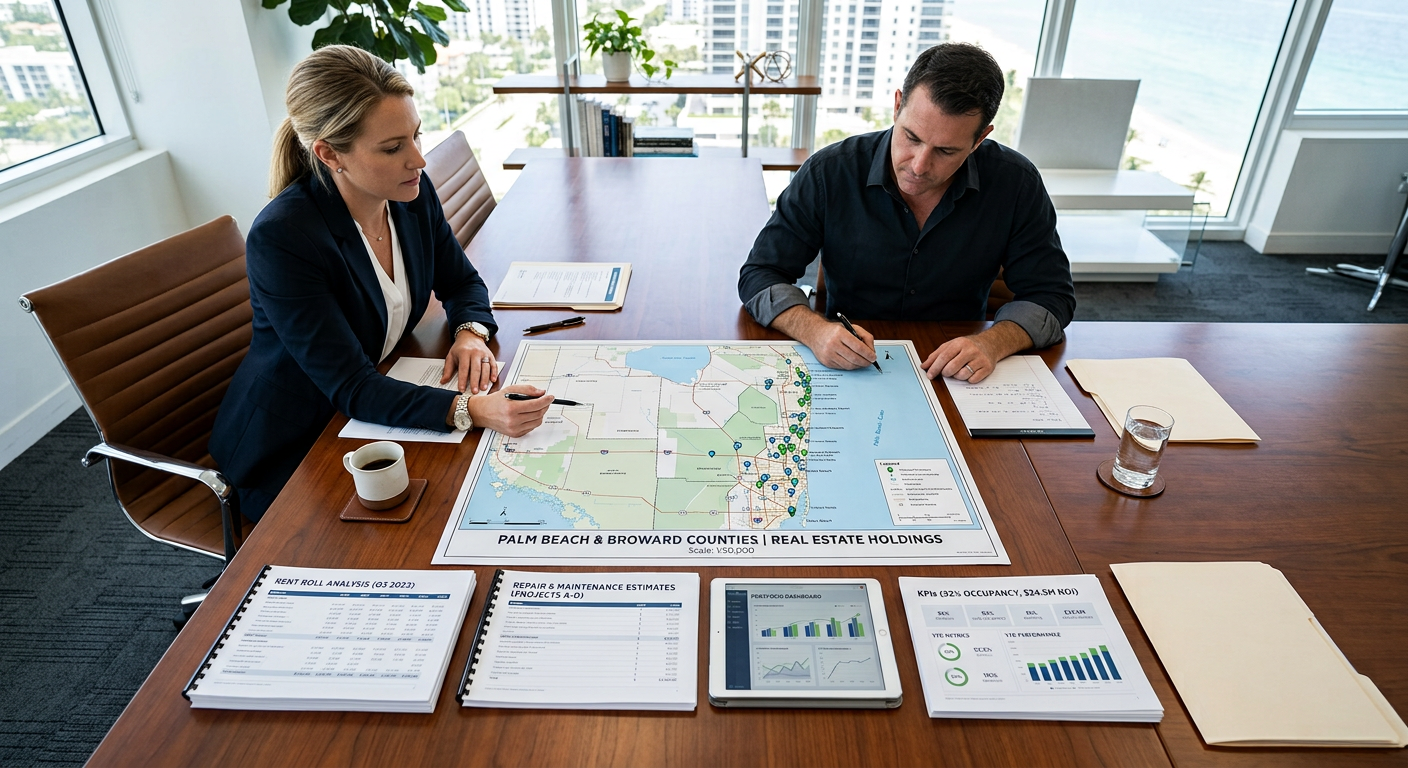
Strong oversight connects financial reporting, operations, capital planning, and market intelligence into one decision process. It gives us an early warning system instead of waiting for a large expense, prolonged vacancy, or declining cash flow to force a reaction.
Measure the Metrics That Affect Ownership Value
A monthly bank balance does not tell the full story. We need consistent reporting that shows net operating income, collected rent, vacancy days, maintenance spending, lease expirations, insurance costs, reserve balances, and budget variances.
The right measures vary by asset. A multifamily owner may focus on expense per unit, renewal activity, and leasing pace. A snowbird with a single condominium may care more about home-watch costs, HOA requirements, seasonal occupancy, and the timing of preventive maintenance.
Vacancy deserves close attention because it can change income assumptions quickly. In the second quarter of 2026, the U.S. rental vacancy rate was 7.3%, while the rate across the South was 9.5%, according to the U.S. Census Bureau Housing Vacancies and Homeownership report. Those figures are not a forecast for any one neighborhood, but they reinforce why we compare each property with its local competition rather than relying on an old rent estimate.
Direct Capital Where It Has a Clear Purpose
Portfolio oversight prioritizes capital expenditures instead of treating every improvement as equally urgent. We separate immediate life-safety and asset-protection work from projects intended to improve rent, reduce operating costs, support insurance requirements, or strengthen resale appeal.
For example, replacing a failing air-conditioning system may protect occupancy and prevent a larger disruption. Renovating kitchens across several units could improve leasing strength, but only after we test costs, likely rent lift, timing, and the owner’s holding period. A thoughtful asset management plan gives each dollar a job.
Keep Managers, Vendors, and Ownership Aligned
Oversight also establishes accountability. We set budgets, approval thresholds, reporting dates, project scopes, and communication expectations so property managers and vendors understand what success looks like.
This matters when a portfolio has several homes, different ownership entities, or investors who need regular updates. Clear roles reduce duplicate work, surprise invoices, and decisions based on incomplete information.
Portfolio Oversight Is Different From Property Management
Property management and portfolio oversight are complementary, but they answer different questions. Property management handles the daily execution that keeps a building or home functional, occupied, and responsive to residents.
Portfolio oversight operates at a higher level. We evaluate whether the management plan is working, whether costs are in line with the budget, and whether the asset still belongs in the portfolio.
A simple example makes the distinction clear. If a tenant reports a plumbing issue, the property manager coordinates the repair. If plumbing expenses have risen across several homes, portfolio oversight reviews vendor pricing, property conditions, reserve needs, and whether a targeted replacement program makes more sense than repeated emergency calls.
For private equity groups, this difference is even more important. A fund may have capable onsite teams, yet still need consolidated dashboards, operating targets, capital approval processes, and investor-ready reporting. For an accidental landlord, the same discipline can be simplified into a monthly review of income, expenses, reserves, lease timing, and next-step decisions.
Why South Florida Owners Need a Local Oversight Lens
South Florida ownership requires more than a spreadsheet because market conditions can vary sharply from one city or neighborhood to the next. Seasonal demand, coastal exposure, HOA rules, insurance renewals, and property age can change the practical economics of an asset.
Seasonality Changes the Operating Calendar
West Palm Beach, Boynton Beach, Delray Beach, and Riviera Beach often experience seasonal shifts that affect leasing, vendor availability, maintenance scheduling, and owner use. We plan around those patterns, especially when a property serves both personal and income-producing purposes.
A snowbird home may need a calendar that protects personal access while preserving rental income when the owner is away. A vacation rental may require different staffing, cleaning standards, and income assumptions than a long-term rental. The oversight process makes those tradeoffs visible before they become conflicts.
Insurance and Resilience Need a Budget Line
Coastal and near-coastal assets require deliberate planning for insurance, storm preparation, deductibles, and resilience upgrades. These costs should not live only in an emergency file. They belong in annual budgets, reserve targets, and scenario planning.
We recommend reviewing property-specific exposure, policy renewal dates, major building systems, and vendor readiness well before storm season. That approach allows owners to protect the asset while making calmer decisions about repairs, coverage, and reserves.
Exit Decisions Should Start Before a Sale
An owner does not need to list a property to benefit from sale-readiness. Oversight keeps financial records organized, identifies deferred maintenance, clarifies the income story, and highlights improvements that may support future marketability.
When selling becomes the right move, owners can use real estate guidance for investment and residential sales to coordinate the asset strategy with pricing, presentation, and timing. The strongest sale decisions are usually the result of preparation, not frustration.

A Practical Oversight Rhythm for Day 11 and Beyond
Portfolio oversight works best as a recurring discipline, not a once-a-year review. By Day 11 of a recurring owner review cycle, we should have enough operating information to identify patterns, assign next steps, and prevent small issues from becoming expensive ones.
A useful rhythm looks like this:
- Monthly: Review collected income, vacancy, delinquency, maintenance activity, major invoices, reserves, and budget variances.
- Quarterly: Compare each asset with its business plan, update rent assumptions, review vendor performance, and reassess capital projects.
- Annually: Set the budget, insurance and reserve targets, ownership goals, financing priorities, and hold-versus-sell criteria.
- After a major event: Revisit the plan following a storm, large repair, insurance change, extended vacancy, or major shift in owner circumstances.
On Day 11, the most valuable question is often simple: what has changed since the plan was approved? Perhaps a renovation is over budget, a unit is taking too long to lease, a vendor is missing response standards, or a property is outperforming and deserves more investment. The answer should lead to a documented action, owner, deadline, and financial impact.
Who Benefits From Portfolio Oversight?
Portfolio oversight is useful at nearly every scale because good decisions compound over time. The level of reporting and analysis should match the complexity of the ownership situation.
Individual Investors
Owners with several single-family rentals or a mix of homes and small multifamily assets gain a clear view of which properties are producing reliable income and which ones are absorbing disproportionate time or capital. This supports smarter acquisition, renovation, and financing decisions.
Accidental Landlords
If we kept a former primary residence as a rental, inherited property, or began renting a home after a relocation, the operation may have started informally. Oversight creates a system for reserves, leasing, maintenance approvals, and long-range decisions without requiring an institutional-sized operation.
Snowbirds and Second-Home Owners
Part-time residents need confidence that the home is being protected and that income plans do not interfere with personal use. A clear oversight calendar coordinates inspections, maintenance, occupancy, and seasonal budgeting.
Private Equity and Larger Ownership Groups
Larger groups need standardized reporting, approval authority, capital planning, and visibility across assets. Oversight helps translate property-level details into the fund-level decisions that partners and stakeholders need to make.
Questions Owners Often Ask
Do we need portfolio oversight if we own only one rental property?
Yes, a single rental can benefit from oversight when it represents meaningful equity or income. The process can be simple, with a budget, reserve target, maintenance plan, market rent review, and annual hold-or-sell assessment.
How often should we review a real estate portfolio?
We recommend a monthly operating review and a more detailed quarterly strategy review. Urgent events, including major repairs, insurance changes, or vacancy, may require an earlier review.
What is the difference between asset management and portfolio oversight?
Asset management usually concentrates on improving the financial and operational performance of individual properties. Portfolio oversight looks across all assets to allocate capital, manage concentration risk, and keep each property aligned with the owner’s broader goals.
Can oversight help us decide when to sell?
Yes, it provides the financial evidence behind a sale decision. We can compare projected income, upcoming capital needs, tax considerations, market conditions, and possible uses for the equity.
Does portfolio oversight replace our accountant or attorney?
No, it coordinates with them. Oversight informs business decisions and reporting, while accountants and attorneys provide specialized tax, legal, and compliance advice.
What should a monthly owner report include?
A useful report includes income, expenses, cash flow, vacancy, open maintenance items, major invoices, reserve balances, lease dates, and a short list of decisions requiring owner approval. The format should be consistent enough to make trends easy to spot.
Put a Clear Plan Behind Every Property
If your South Florida properties need more consistent reporting, better capital planning, or stronger coordination between strategy and daily operations, we can help. Visit Beaches Welcome Service to discuss a portfolio review built around your goals, property mix, and preferred level of involvement.
Clarity Is the Real Value of Oversight
Portfolio oversight gives real estate owners a disciplined way to protect income, preserve property condition, and make decisions before pressure takes control. It brings the daily realities of leasing, repairs, expenses, and market shifts into one clear ownership strategy.
The goal is not more reports or more meetings. It is a portfolio where every property has a purpose, every major expense has context, and every decision supports the next stage of ownership.

