
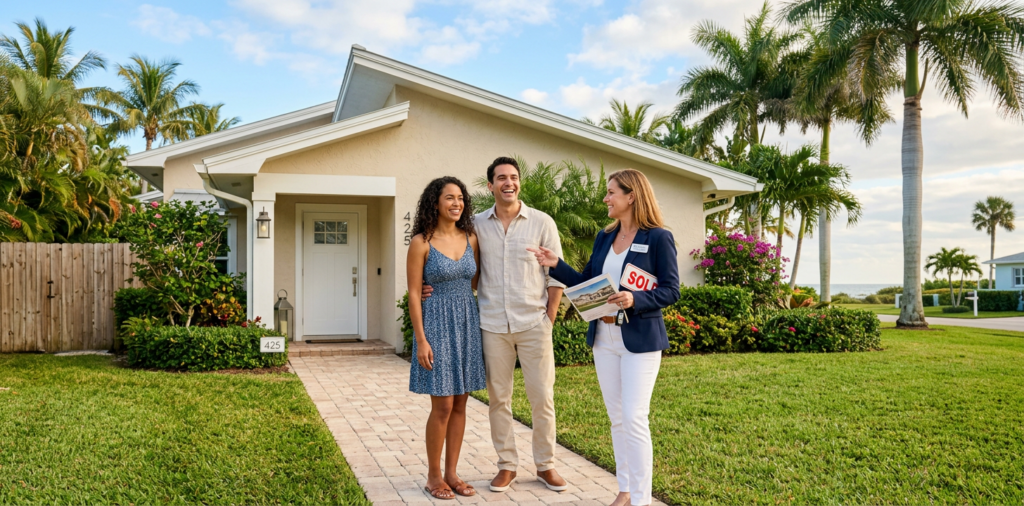
A first home in South Florida can be a strong long-term move, but the winning plan is broader than finding a house with the right number of bedrooms. We need to account for financing, insurance, flood exposure, association rules, repairs, and the life you expect to build after closing.
For anyone buying a home in South Florida as a first-time buyer, preparation creates leverage. A clear approval, realistic monthly budget, and disciplined due diligence help us make a confident offer without overlooking costs that can reshape affordability later.
Start With the Monthly Cost, Not the Listing Price
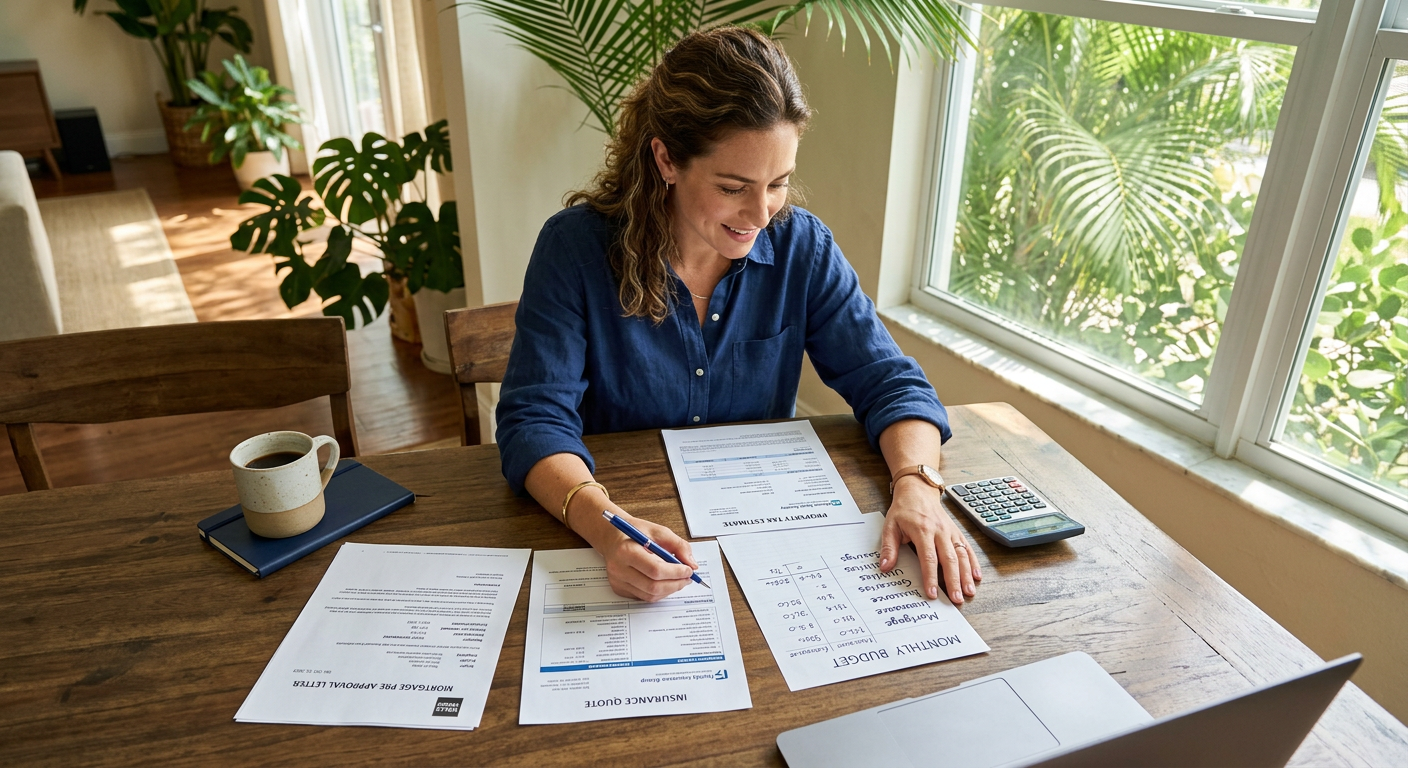
The right purchase price is the one that fits the full ownership cost, including mortgage principal and interest, property taxes, insurance, HOA or condo fees, and a maintenance reserve. In South Florida, a home that appears affordable on a listing sheet can become a stretch once insurance quotes, flood coverage, and association obligations are added.
Before touring seriously, we recommend building two numbers:
- Comfortable monthly payment: What leaves room for savings, travel, childcare, retirement contributions, and normal repairs.
- Maximum approval amount: What a lender may be willing to approve based on debt, income, assets, and credit.
Those numbers are rarely identical. Shopping beneath the maximum gives us room to handle a roof repair, a rising HOA fee, or a higher insurance renewal without turning homeownership into a monthly strain.
The Consumer Financial Protection Bureau explains that the Closing Disclosure separates loan costs, prepaid items, taxes, insurance, and initial escrow payments. Reviewing this document carefully before closing helps prevent expensive surprises. Read the CFPB’s Closing Disclosure explainer.
Secure Pre-Approval Before Falling in Love With a Property
Pre-approval tells us what financing may be available and makes an offer more credible to a seller. It is not a blank check, and it is not final loan approval, but it gives us a serious starting point before we spend weekends touring homes.
We suggest comparing at least two lenders using the same purchase price, loan type, and estimated down payment. Ask each lender to explain the interest rate, APR, mortgage insurance, lender fees, discount points, expected cash to close, and whether the quote assumes a particular insurance premium.
For eligible buyers, Florida Housing’s Homebuyer Program offers 30-year fixed-rate first mortgages through participating lenders and may pair them with down payment or closing-cost assistance. The program lists a minimum 640 credit score, approved homebuyer education, income and purchase-price limits, and a first-time buyer definition that generally looks at whether the buyer owned and occupied a primary residence during the prior three years.
Down payment help is common enough that it deserves a real conversation, not an assumption. In fiscal year 2025, 42.31 percent of FHA purchase mortgage endorsements used some form of down payment assistance, according to the U.S. Department of Housing and Urban Development. Assistance can be valuable, but we should also understand whether it is forgivable, deferred, repayable at sale or refinancing, or paired with a higher-rate first mortgage.
Choose a Neighborhood Based on Your Next Five Years
A first home should support the way we live now while leaving room for likely changes ahead. That could mean a growing household, a hybrid-work commute, aging parents, a future relocation, or the option to hold the property as a long-term rental.
South Florida is not one uniform market. West Palm Beach and Fort Lauderdale may prioritize access to employment centers and urban amenities. Boynton Beach and Delray Beach can appeal to buyers balancing coastal access with neighborhood lifestyle. Port Saint Lucie and Fort Pierce may offer different space, commute, and new-construction tradeoffs. Lake Worth and Riviera Beach require similarly careful property-by-property evaluation, especially where proximity to the coast changes insurance and flood considerations.
We recommend scoring each neighborhood against priorities such as:
- Commute time and daily errands
- School, healthcare, and recreation access
- Flood zone and elevation information
- Insurance availability and estimated premium
- HOA or condo restrictions
- Condition and age of roofs, windows, HVAC, and plumbing
- Resale appeal if plans change within five to seven years
For a closer look at coastal ownership considerations, our article on buying a home in Lake Worth Beach explains why salt air, humidity, and storm exposure should affect how we inspect major systems. Buyers considering waterfront-adjacent areas can also review these Riviera Beach buyer considerations.
Treat Insurance, Flood Risk, and Condition as Deal Terms
In South Florida, inspections and insurance are not closing formalities. They are central parts of the buying decision, and they should shape the offer price, repair requests, and cash reserve we keep after closing.
We should obtain homeowner’s insurance quotes as early as possible, ideally during the inspection period. Insurers may focus on roof age, electrical systems, plumbing, wind mitigation features, prior claims, and the property’s location. Flood insurance is separate from a standard homeowner’s policy, and a lender can require it when a property sits in a mapped flood zone.
For single-family homes, our inspection priorities usually include:
- Roof life and wind mitigation documentation
- HVAC age, maintenance history, and cooling performance
- Electrical panel, wiring, and grounding
- Plumbing supply lines, drains, and water heater
- Windows, shutters, impact protection, and permits
- Signs of moisture intrusion, termites, or drainage problems
A low-priced house with an aging roof or unresolved permitting issue is not automatically a bad purchase. It simply needs an honest repair budget and a financing plan that can accommodate the work.
Condo Buyers Need a Different Level of Due Diligence
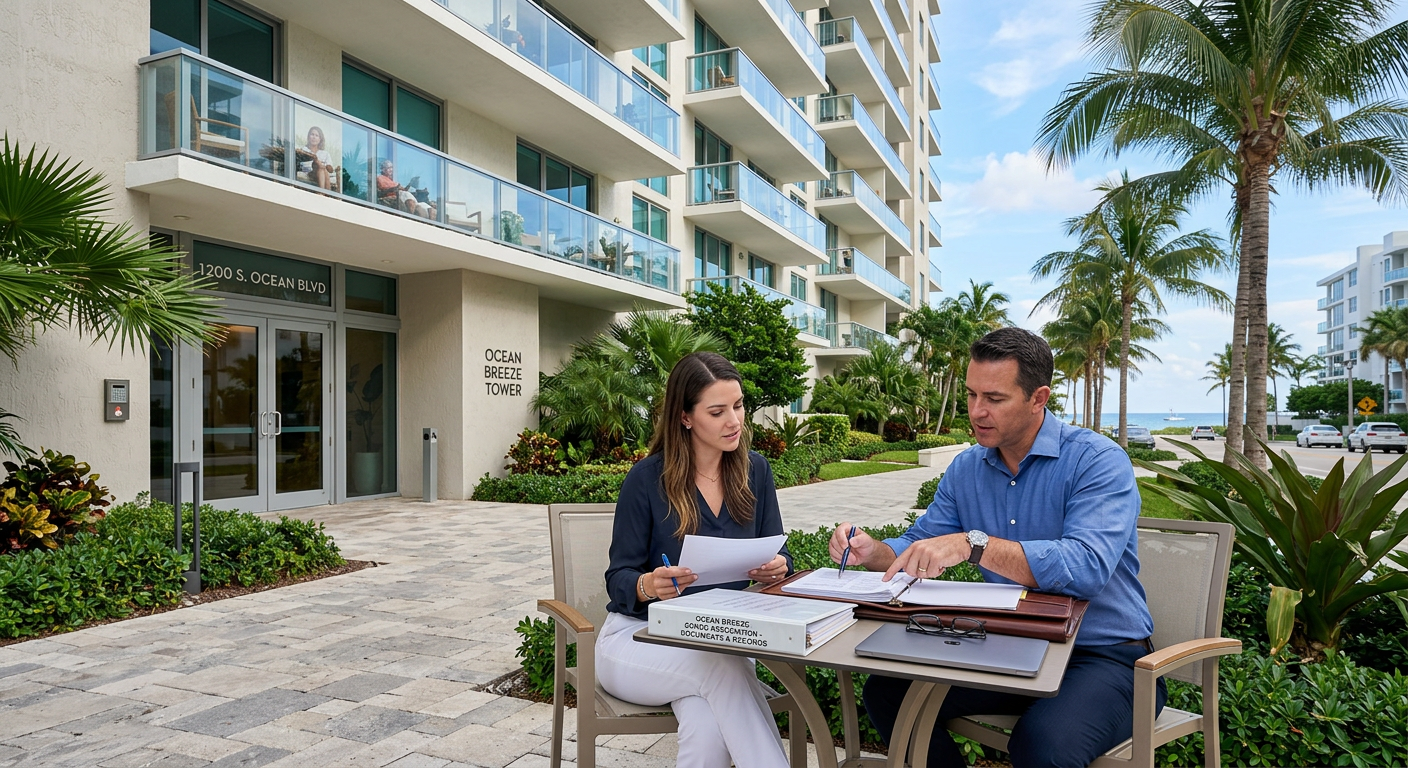
A condo can provide convenience and location, but the unit price tells only part of the story. Monthly association fees, reserves, special assessments, building insurance, rental policies, and financing eligibility can materially change both ownership costs and resale options.
Florida’s condo rules have increased the importance of reviewing association records. Buyers can request key documents, and Florida Realtors notes that required materials can include the association’s financial information, budget, structural integrity reserve study, and applicable inspection reports. Review the buyer document guidance from Florida Realtors.
Before making a condo offer, we should ask for:
- Current budget and the last two years of financial statements
- Reserve information and any structural integrity reserve study
- Board meeting minutes and known pending projects
- Current or proposed special assessments
- Building insurance declarations and deductibles
- Rental restrictions, approval rules, and pet policies
- Litigation, delinquency, and lender eligibility information
This is especially important for buyers who may become snowbirds, relocate for work, or eventually retain the home as a rental. A building’s rental cap or approval standards can limit flexibility when plans change.
Build a First Home That Can Become a Smart Asset
The most durable first-home strategy looks beyond move-in day. We should buy for personal use first, then preserve options where possible by selecting a property with sound condition, broad resale appeal, and rules that match our future plans.
That approach matters for South Florida buyers with evolving goals. A young household may later need more space. A snowbird may spend part of the year elsewhere. An investor-minded buyer may want the option to lease the property after a future move. We should not assume that an owner-occupied mortgage, city ordinance, HOA rule, or condo policy permits the rental plan we have in mind.
This is where a progressive buying strategy earns its value. Instead of asking only, “Can we buy this home?” we ask:
- Can we afford it with insurance, taxes, and reserves included?
- Can we hold it comfortably for at least five years if the market changes?
- Can we sell it easily if relocation becomes necessary?
- If we later rent it, do the loan terms and community rules allow it?
Buyers who want a deeper breakdown of assistance options can review our overview of first-time buyer programs across South Florida. The details change by program and funding availability, so we should verify eligibility directly with an approved lender before building an offer around assistance.
Put Strong Protections Into the Offer
A competitive offer does not have to mean an unprotected offer. The goal is to be decisive while keeping contingencies and timelines that allow us to verify the property, financing, and ownership costs.
We generally want to discuss these offer components with a qualified real estate professional and lender:
- Financing contingency and loan-approval timeline
- Inspection period that permits specialized inspections when needed
- Appraisal contingency and options if value comes in low
- Seller disclosures, permits, repair records, and insurance claims history
- Condo or HOA document review period
- Repair credits or price adjustments when major issues appear
We should be cautious about waiving inspection rights simply to compete. The cost of an undiscovered roof, electrical, plumbing, or structural problem can exceed the advantage gained by a more aggressive offer.
Common Questions From First-Time Buyers
Do we need a 20 percent down payment to buy a home?
No. FHA, VA, USDA, and some conventional programs can require less than 20 percent down, although the right loan depends on credit, income, property type, and long-term cost. A lower down payment can preserve cash reserves, but it may also increase mortgage insurance or monthly payments.
Can gift funds help with our down payment?
Often, yes. Many loan programs allow eligible gift funds, but lenders require documentation showing the source and terms of the gift. We should discuss the plan before moving money between accounts so the lender can provide the correct paperwork.
Does a pre-approval guarantee final mortgage approval?
No. Final approval still depends on underwriting, appraisal, title work, updated financial documents, and the property meeting loan requirements. Avoid opening new credit accounts, changing jobs, or making large undocumented deposits while the loan is in process.
Should we buy a condo or a single-family house first?
The better choice depends on how much maintenance we want, what monthly fee we can support, and how much control we want over the property. Condos can simplify exterior upkeep, while single-family homes may provide more flexibility, but both require careful cost analysis.
Can a snowbird qualify as a first-time buyer in Florida?
Possibly, but program eligibility often depends on primary-residence occupancy, income, previous ownership, and lender rules. A second home or seasonal residence may not qualify for the same financing or assistance programs as a primary home.
Is it safe to waive the home inspection to make our offer stronger?
For most first-time buyers, it is a high-risk decision. We may shorten an inspection period or use a focused inspection strategy, but we should understand the financial exposure before giving up the right to investigate a property’s condition.
Plan Your South Florida Purchase With Local Perspective
A well-managed purchase starts with local knowledge and a realistic ownership plan, not pressure to move faster than the facts support. At Beaches Welcome Service, we help buyers evaluate homes, neighborhoods, and long-term property goals across South Florida, from West Palm Beach and Boynton Beach to Fort Lauderdale, Port Saint Lucie, and Fort Pierce.
Bring us your budget, timeline, and future plans. We will help you focus on properties that fit the life you want to build and the ownership costs you can sustain.
The Right First Home Is a Financial Decision and a Lifestyle Decision
Buying a home in South Florida for the first time is entirely achievable when we make decisions in the right order. Start with a full monthly budget, line up sound financing, inspect every meaningful risk, and choose a property that remains useful if your plans evolve.
The best purchase is not necessarily the newest house or the lowest list price. It is the home we can afford confidently, protect with diligent research, and hold with a clear plan for what comes next.

