
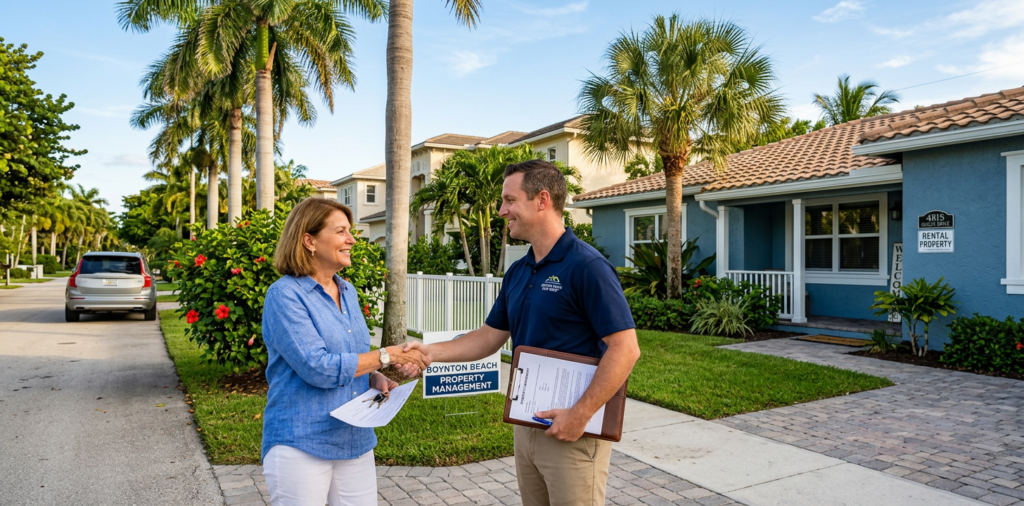
A rental home can produce dependable income, but it can also become a second full-time job when tenant questions, repair calls, leasing gaps, and paperwork pile up. That is why hiring a property manager Boynton Beach owners can trust should be a deliberate business decision, not a rushed response to one difficult tenant or late-night maintenance issue.
The local opportunity is real. The U.S. Census Bureau reports that 64.7% of Boynton Beach housing units were owner-occupied from 2020 through 2024, which means roughly 35.3% were not owner-occupied. For investors, accidental landlords, and snowbirds, that sizable rental base makes careful operations, competitive positioning, and responsive service matter.
What We Should Compare Before Choosing a Manager
| What to evaluate | Strong answer looks like | Warning sign | Why it matters |
|---|---|---|---|
| Leasing | Clear marketing and screening process | Vague tenant standards | Better placement decisions |
| Fees | Written fee schedule | Open-ended add-ons | Protects your net income |
| Maintenance | Approval rules and vendor process | No repair controls | Limits surprise costs |
| Reporting | Monthly statements and property updates | Delayed or unclear records | Keeps you in control |
| Local knowledge | HOA, storm, and neighborhood experience | One-size-fits-all approach | Supports smarter decisions |
A manager is not just someone who collects rent. They are often the person shaping your tenant experience, coordinating vendors, protecting the condition of your home, and giving you the information needed to decide whether to hold, improve, refinance, or sell.

1. Confirm What Services Are Actually Included
Every company uses the phrase “full service” differently. Before we compare management proposals, we should ask for a written breakdown of leasing, advertising, applicant screening, lease preparation, rent collection, maintenance coordination, inspections, renewals, tenant communication, accounting, and move-out handling.
For a single-family home, a condo, or a small multifamily building, the right scope depends on the asset and your involvement. An owner who lives in Boynton Beach may want leasing and maintenance support. A snowbird or out-of-state investor usually needs a more complete operating system, including regular updates and a reliable local point of contact.
For a deeper look at the day-to-day responsibilities involved, review this guide to South Florida property management services.
2. Ask How Tenant Screening Works, Not Whether It Exists
“Thorough screening” sounds good, but it is not enough detail. We should ask which income standards, rental-history checks, background reviews, identity verification steps, and application policies the manager uses, along with how they apply those standards consistently.
Consistency matters for both asset protection and fair treatment. The U.S. Department of Housing and Urban Development explains that federal fair housing protections apply broadly to housing-related activity. A capable manager should have a documented, repeatable process instead of making decisions based on instinct or informal exceptions.
Ask one practical follow-up: “Who makes the final approval decision, and how is that decision documented?” The answer tells us a lot about accountability.
3. Compare Fees Based on Total Cost, Not the Monthly Percentage
The lowest advertised monthly fee is not always the lowest cost. Leasing fees, renewal charges, inspection fees, maintenance markups, administrative charges, vacancy fees, and early termination provisions can change the real economics quickly.
We recommend putting every proposal into the same simple worksheet. List the monthly management fee, new-lease fee, renewal fee, inspection schedule, repair coordination charges, vendor markup policy, and any cost charged when the property is vacant. Then compare what is included, not just the first number in bold type.
Local conditions also affect value. HOA requirements, older home systems, hurricane-season preparation, and contractor availability can all influence operating costs. Our guide to single-family property management costs can help you build a more complete comparison.
4. Understand the Maintenance Approval Process
Maintenance is where many owner-manager relationships either become valuable or frustrating. We should know who receives repair requests, who decides whether an issue is urgent, which vendors are used, what dollar amount requires owner approval, and how photos, invoices, and completion updates are shared.
A good process balances speed with financial discipline. Waiting too long can turn a manageable leak into damage, while approving every small repair without controls can erode cash flow. The goal is not to avoid repairs, it is to manage them early, transparently, and with clear documentation.
Florida rental operations also carry legal responsibilities. The Florida Residential Landlord and Tenant Act addresses important areas such as deposits, rental agreements, and landlord obligations. We should not expect a manager to replace legal counsel, but we should expect them to operate with organized procedures and to know when an issue needs qualified legal guidance.
5. Require Reporting That Helps You Make Decisions
An owner statement should do more than show rent received and bills paid. We want a monthly view of income, expenses, open maintenance items, lease dates, upcoming renewals, vacancy status, and material risks that may affect the property.
For one rental, clear reports reduce the chance of missed details. For a portfolio across Boynton Beach, Delray Beach, West Palm Beach, Lake Worth, Fort Lauderdale, Port Saint Lucie, Fort Pierce, or Riviera Beach, they become essential for tracking performance across assets.
This is where property management and asset oversight meet. Day-to-day operations keep the home functioning, while a bigger-picture review helps us decide which upgrades, lease strategies, or sale timing could support stronger long-term results. Learn more about real estate asset management for South Florida owners.

6. Check Local Experience With Your Property Type
Boynton Beach is not one uniform rental market. A condo may involve association rules, rental restrictions, and approval timelines. A detached home may need landscaping, pool coordination, roof monitoring, and more direct vendor oversight. Small multifamily properties require consistent leasing, resident communication, and budget discipline across units.
We should ask for examples that match the property in front of us. If you own a seasonal residence or manage from another state, ask how the company handles inspections, storm preparation, emergency access, and owner communication when you are unavailable.
Local coverage can also matter when your strategy expands. A manager who understands nearby markets may help you evaluate whether a future acquisition, renovation, or sale supports your portfolio goals instead of treating each home as an isolated address.
7. Evaluate Communication Before You Sign
The interview process is a preview of the working relationship. If a company is slow to explain fees, avoids direct questions, or provides unclear answers before you become a client, communication may not improve once a lease issue appears.
We should agree on response expectations before signing. Ask how quickly owners receive updates, who handles after-hours emergencies, whether you will have one primary contact, and how major decisions are approved. Written expectations are especially valuable for owners who travel, live out of state, or hold multiple properties.
Independent manager, local firm, or large platform?
There is no universal winner. An independent manager may offer personal attention, but capacity can be limited during busy periods. A larger regional company may have more staff and systems, but some owners receive less direct access to decision-makers. A local boutique firm can be a strong fit when you want regional knowledge and hands-on communication, provided its service scope, reporting, and vendor controls are clearly defined.
The best fit is the one that matches your property type, ownership goals, desired involvement, and risk tolerance. We should always compare written proposals side by side and speak with current or former clients when possible.
Questions We Should Ask in the Final Interview
Bring this checklist to every conversation:
- How do you price rentals and adjust strategy when interest is slow?
- What screening standards do you use, and how do you apply them consistently?
- Which fees apply during leasing, renewal, vacancy, and maintenance?
- What is the repair approval threshold, and are vendor markups charged?
- How often do you inspect the property and share updates?
- What will our monthly report include?
- How do you handle HOA communication, storm planning, and after-hours emergencies?
- What happens if we decide to sell the property while it is occupied?
Frequently Asked Questions
Is hiring a property manager Boynton Beach owners need worth the cost?
It can be, particularly when time, distance, maintenance coordination, and vacancy risk are affecting your results. The key is measuring value against total fees, quality of communication, tenant placement process, and the time you recover as an owner.
What is a reasonable management fee for a rental home?
The right fee varies by service level, property type, rent amount, location, and whether leasing or renewal work is included. Instead of focusing on a single percentage, we should compare the full fee schedule and the operating support provided.
Can a property manager help if we live out of state?
Yes. Remote owners often benefit from local leasing, maintenance coordination, inspections, tenant communication, and reporting. Review how the manager handles emergencies and how often you will receive property updates before you commit.
Should we hire a manager before buying an investment property?
Usually, yes. Talking with a manager before closing can help us estimate realistic rent, likely maintenance needs, HOA considerations, and operating costs. That information makes underwriting more practical.
Can we sell a home while it is managed and tenant occupied?
Yes, but the lease, tenant communication, showing process, deposit records, and buyer strategy all need close coordination. This guide on selling a house with tenants in Boynton Beach explains the key planning points.
What should make us walk away from a management agreement?
Walk away when fees are unclear, reporting is vague, maintenance controls are missing, communication is inconsistent, or the agreement makes it difficult to end the relationship fairly. A strong manager should be comfortable explaining every part of the process.
Discuss Your Boynton Beach Rental Strategy With a Local Team
If you need support with long-term rentals, vacation rental oversight, single-family or multifamily operations, asset planning, or a future sale, Beaches Welcome Service can help you evaluate the next move. We can build a management approach around your home, timeline, and investment goals across South Florida.
Make the Choice That Protects Both Time and Value
The right manager brings structure to the parts of ownership that are easiest to underestimate: tenant selection, documentation, repair decisions, communication, and financial visibility. When we compare service levels carefully and ask direct questions before signing, we are far more likely to find a partner who protects the property instead of creating another layer of stress.
Hiring a property manager is ultimately about control, not surrendering it. With the right agreement, clear expectations, and local experience, we can spend less time reacting to rental problems and more time making smart decisions for the asset.

