
Renting out a home in South Florida sounds simple until you get into the details. Pricing, insurance, tenant screening, lease terms, repairs, local rules, and tax questions can turn a promising income property into a second job fast.
If you're wondering how to rent out your house in South Florida, the smartest move is to treat it like an investment from day one. Whether you're an accidental landlord in West Palm Beach, a snowbird in Delray Beach, an investor in Fort Lauderdale, or a portfolio owner looking at Port Saint Lucie and Fort Pierce, the goal is the same: protect the asset, reduce risk, and keep income consistent.
South Florida is still attractive for rental owners because demand is supported by migration, lifestyle, jobs, and limited coastal inventory. The U.S. Census Bureau reported that the Port St. Lucie metro area grew 2.9% from 2023 to 2024, making it one of the fastest-growing metros in the country, while Zillow listed Fort Lauderdale's average rent at $2,700 in July 2026. Those numbers don't guarantee profit, but they do show why owners need a clear rental strategy before listing a property. U.S. Census Bureau Zillow
South Florida Rental Options at a Glance
| Rental Strategy | Best Fit | Main Benefit | Watch Out For |
|---|---|---|---|
| Long-term rental | Stable cash flow | Lower turnover | Tenant screening |
| Seasonal rental | Snowbird markets | Higher peak pricing | Off-season vacancy |
| Short-term rental | Beach or tourist areas | Revenue upside | Licensing and rules |
| Mid-term rental | Traveling professionals | Flexibility | Furnishing costs |
Decide What Kind of Rental You Actually Want
Before you price the home, decide what business you're entering. A long-term rental in Boynton Beach is not the same as a vacation rental near Fort Lauderdale Beach or a seasonal home in Delray Beach.
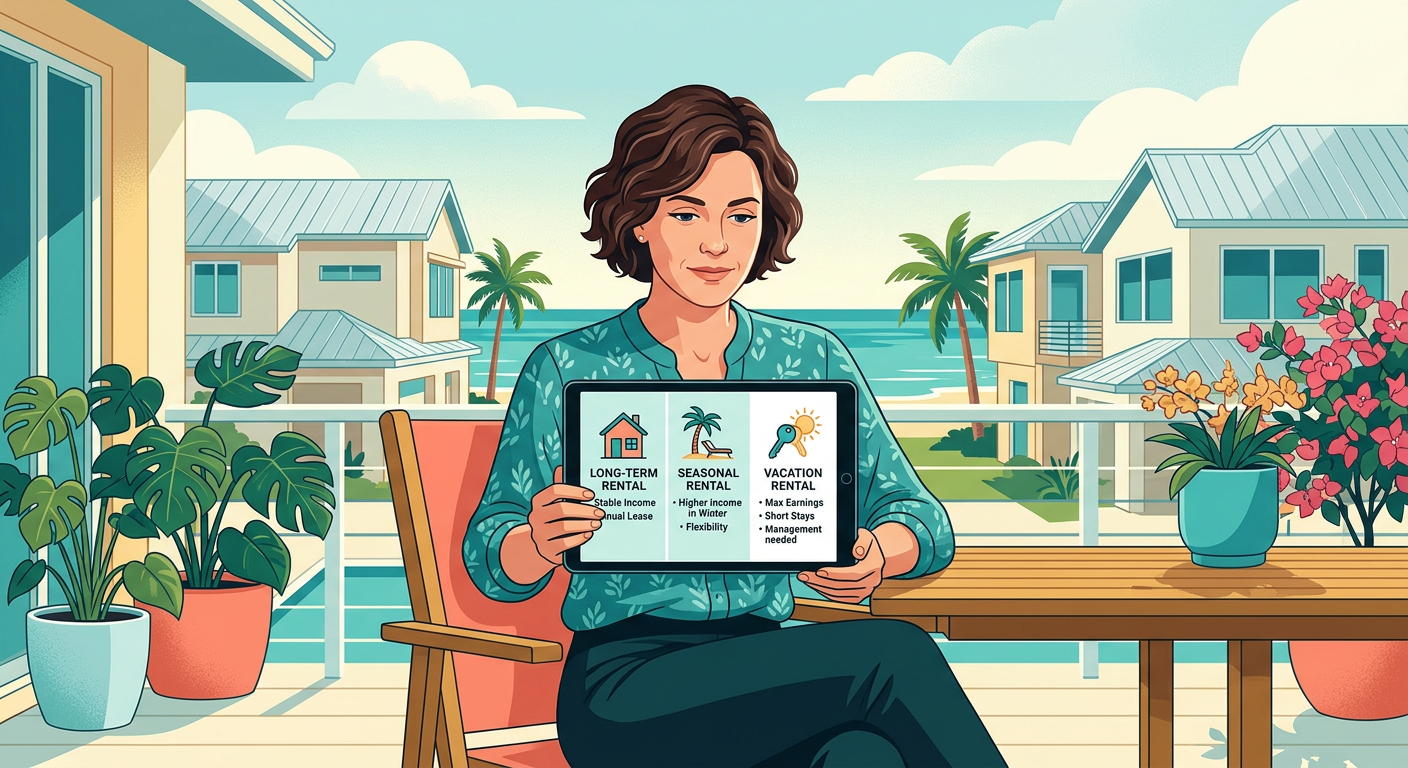
Long-term rentals usually offer steadier income, fewer turnovers, and simpler operations. They're often a better fit for accidental landlords, out-of-state owners, and investors who want predictable monthly cash flow without constant guest coordination.
Vacation and seasonal rentals can generate more gross revenue in the right location, but they also demand more active management. You'll deal with furnishing, cleaning, guest communication, dynamic pricing, platform reviews, supplies, occupancy swings, and local compliance.
If you're still comparing management models, this guide to South Florida property management services is a practical next step.
Check Local Rules Before You List
This is where many owners get tripped up. Florida has statewide landlord-tenant laws, but cities, counties, condo associations, and HOAs can add their own rental restrictions.
For long-term rentals, review your deed restrictions, HOA rules, condo documents, local business tax receipt requirements, and any municipal rental registration rules. Some associations limit lease length, number of leases per year, tenant approval timelines, vehicles, pets, and move-in deposits.
For vacation rentals, confirm whether your property needs a Florida DBPR license. The state defines certain whole-unit vacation rentals as transient public lodging establishments, and DBPR provides guidance for vacation rental licensing. Florida DBPR
Short-term rentals may also trigger state and local taxes. Florida's transient rental tax rules can apply to living quarters rented for short stays, and cities or counties may have additional tourist development tax obligations. Florida Statutes
Price the Property Like an Investor
Your rent should not be based on your mortgage payment alone. It should reflect current comparable rentals, location, condition, lease length, amenities, parking, pet policy, school zones, commute routes, outdoor space, and storm-readiness features.
Look closely at nearby active listings and recently leased homes. A renovated single-family home in Lake Worth may attract a different tenant pool than a townhouse in Riviera Beach or a newer home in Port Saint Lucie.
Also account for real ownership costs:
- Mortgage, taxes, insurance, and HOA dues
- Lawn, pool, pest control, and utilities during vacancy
- Repairs, maintenance, and capital reserves
- Leasing costs and management fees
- Vacancy between tenants
- Legal, accounting, and compliance support
For owners in St. Lucie County, this Port Saint Lucie property management fees guide can help you compare management expenses against expected rent.
Prepare the House Before Showings
A rental-ready home is not just clean. It is safe, functional, easy to maintain, and easy for a qualified tenant to trust.
Start with the basics: working locks, smoke detectors, HVAC service, plumbing checks, clean appliances, fresh filters, pest treatment, landscaping, and clear instructions for major systems. In South Florida, also pay close attention to roof age, drainage, hurricane shutters or impact windows, humidity control, and signs of leaks.
If the home was built before 1978, federal law generally requires lead-based paint disclosures before lease signing. The EPA says landlords, agents, and property managers must provide known lead information and required disclosures for most pre-1978 housing. EPA
Screen Tenants Fairly and Consistently
Tenant screening is where you protect your income before problems start. Use clear written criteria for income, credit, rental history, employment, eviction history, background checks, occupancy limits, pets, and deposits.
Consistency matters. HUD explains that the Fair Housing Act prohibits discrimination in rental housing based on race, color, national origin, religion, sex, familial status, and disability. Your advertising, screening, showing process, and approval decisions should follow the same standards for every applicant. HUD
Here's the thing: the goal is not simply to place someone quickly. The goal is to place the right tenant at the right rent with documentation that protects both sides.
Use a Florida-Specific Lease and Handle Deposits Correctly
A generic lease pulled from the internet can create expensive gaps. Use a Florida-specific lease that clearly covers rent due dates, late fees, maintenance responsibilities, pest control, lawn and pool care, appliance ownership, pet terms, utilities, HOA rules, notice requirements, renewal terms, and move-out procedures.
Florida has specific rules for security deposits and advance rent. Under Florida Statute 83.49, landlords must handle deposits in approved ways and follow strict timelines for returning deposits or sending written notice of a claim. Florida Senate
Document the property condition before move-in with photos, video, a signed checklist, appliance notes, key inventory, garage remotes, gate access, and HOA materials. That record can prevent disputes later.
Plan for Maintenance Before Something Breaks
South Florida homes need proactive maintenance because heat, salt air, storms, moisture, and pests can create fast-moving problems. A small leak can become mold. A neglected AC system can turn into an emergency call during peak summer.
Build a vendor list before the tenant moves in. At minimum, have reliable contacts for HVAC, plumbing, electrical, roofing, appliances, landscaping, pool service, pest control, cleaning, and emergency mitigation.
For Delray Beach owners with single-family homes, this Delray Beach property manager guide explains what professional oversight often includes.
Know When Professional Management Makes Sense
Self-managing can work if you live nearby, understand Florida rental rules, have trusted vendors, and can respond quickly. But if you're a snowbird, investor, private equity owner, or busy accidental landlord, professional management can protect your time and reduce operational risk.
A good manager can help with rent pricing, marketing, tenant screening, lease execution, move-in documentation, inspections, maintenance coordination, renewals, accounting, and owner reporting. For multi-family owners, asset management may also include budget oversight, rent strategy, capital planning, and portfolio performance reviews.
Get Local Guidance Before You Hand Over the Keys
If you want your rental handled with local market knowledge and practical owner support, connect with Beaches Welcome Service. The team supports long-term rental management, vacation rental management, single-family and multi-family property management, asset oversight, and real estate sales across South Florida.
A short planning conversation can help you decide whether to lease, sell, hold, renovate, or reposition the property for stronger returns.
FAQ
Do I need a license to rent out my house in South Florida?
For a typical long-term single-family rental, a state lodging license is usually not the same issue as it is for vacation rentals. However, city, county, HOA, condo, and business tax requirements can still apply, so verify local rules before accepting a tenant.
Is long-term or short-term rental better in South Florida?
It depends on location, property type, rules, furnishing costs, and your tolerance for active operations. Long-term rentals tend to be steadier, while vacation rentals may offer higher gross revenue but more compliance, turnover, and management demands.
How much rent can I charge?
Use nearby comparable rentals, not guesswork. Compare homes with similar location, size, condition, parking, amenities, pet policies, and lease terms, then adjust for your home's strengths and weaknesses.
Can I rent my home if I still have a mortgage?
Often, yes, but review your loan terms, insurance policy, HOA rules, and tax situation first. Some owner-occupied loans, insurance policies, or association documents may require notice or changes before the home becomes a rental.
What should I do before the tenant moves in?
Service major systems, fix safety issues, deep clean, document condition, collect required disclosures, set up rent payment procedures, confirm utilities, and give the tenant clear maintenance instructions.
Should I allow pets?
Pets can widen your tenant pool, but you need a clear pet policy. Define approved animals, fees or deposits when allowed by law, breed or size rules if applicable, cleaning expectations, yard responsibilities, and documentation for assistance animals.
Final Takeaway
Renting out a South Florida home can be a smart wealth-building move, but it works best when you approach it with structure. Choose the right rental model, confirm the rules, price carefully, screen consistently, document everything, and plan for maintenance before emergencies happen.
The owners who do well usually aren't guessing. They're treating the property like a business, and that mindset makes all the difference.

